As you may already know, I love to bring my readers meaningful discoveries, tools, ideas that support the Empath’s path. When something proves valuable in my own life, I like to share it, hoping it may help others walking a similar journey.
And today, I want to talk about rebounding.
If you have never heard of rebounding before, it is simply the practice of exercising on a small trampoline, often called a rebounder. It may sound almost childlike, and that is part of its magic. Unlike punishing workouts that leave the body depleted and stressed, rebounding feels playful, uplifting, and surprisingly therapeutic.
As I write this, I have only been rebounding for around six months, yet it has quickly become one of my favourite forms of movement, not just physically, but emotionally and energetically too.
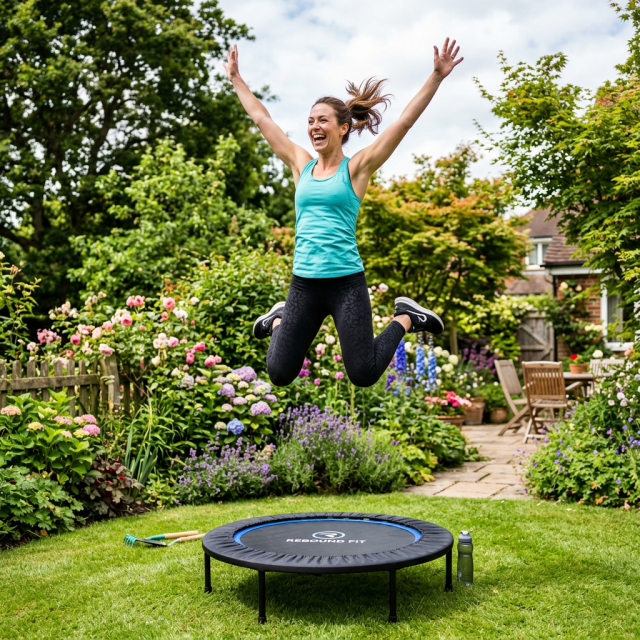
Rebounding has become one of my absolute favourite things. It’s joyful, energising, and downright addictive. With the music blasting and my feet bouncing, I can’t help but smile the whole way through.
There’s something freeing about it; it wakes up your whole body and brings out that inner child we so often forget about.
What makes rebounding extra special is that it does not feel harsh on the nervous system. Some Sensitive people struggle with intense exercise because high-impact workouts can increase cortisol, and adrenaline. Instead of feeling energised afterwards, they can feel wired, anxious, inflamed, or emotionally overwhelmed.
Rebounding is different.
It stimulates the body without shocking it. It energises while simultaneously calming. And for many Sensitive people, that balance is exactly what the body has been craving.
One of the most fascinating things about rebounding is its effect on the lymphatic system. Unlike the heart, which has its own pump, the lymphatic system relies on movement to circulate lymph fluid and remove waste products, toxins, inflammatory compounds, and cellular debris from the body.
The gentle up-and-down motion of rebounding acts almost like a pump for the lymphatic system. With every bounce, the body experiences a moment of weightlessness followed by gentle gravitational pressure, helping lymph fluid move more efficiently throughout the body.
This is especially important for anyone who often feels sluggish, inflamed, puffy, toxic, or energetically heavy.
Known benefits of rebounding include:
- Improved lymphatic drainage
- Better circulation
- Increased energy levels
- Reduced inflammation
- Improved balance and coordination
- Gentle cardiovascular conditioning
- Strengthening of muscles and bones
- Support for detoxification
- Reduced stress and tension
- Improved mood and mental clarity
- Better sleep
- Enhanced immune function
- Gentle support for weight loss
- Improved stamina without excessive strain on the joints
For Sensitive people, one of the biggest benefits may actually be nervous system regulation.
After a session, many people, myself included, describe feeling calmer, more grounded, and emotionally lighter. It can also help discharge nervous energy that has built up throughout the day. If you tend to absorb stress from other people or feel mentally “full,” a few minutes of rebounding can feel like shaking the static out of your system.
Another fascinating aspect is its effect on the fascia, the connective tissue that runs throughout the body. Modern lifestyles leave many people physically stagnant. Sitting for long periods, stress, poor posture, inflammation, and lack of movement all contribute to stiffness and restriction within the body. The bouncing motion helps gently mobilise tissues and wake the body back up.
And unlike exhausting gym routines, rebounding is incredibly accessible.
You do not need an hour-long workout.
In fact, 5 minutes a few times a day is often enough to notice benefits.
That is one of the reasons it works so beautifully for Sensitive people. Short bursts tend to energise the body without tipping the nervous system into overload.
You can:
- Gently bounce while listening to music
- Rebound while grounding yourself emotionally
- Use it first thing in the morning for energy
- Use it in the evening to release stress
- Pair it with breathwork
- Use it during winter months when you cannot get outdoors as much
And perhaps best of all, it brings back a sense of fun.
Healing can become so serious. So focused on symptoms, restrictions, and fixing ourselves. Rebounding reminds the body what lightness feels like again.
It reconnects you with movement, rhythm, joy, and vitality.
For anyone who has spent years feeling weighed down physically, emotionally, or energetically, this could just be the gamechanger you are looking for.
There are two main types of rebounders: spring rebounders and bungee rebounders.
Spring rebounders tend to give a firmer bounce and a slightly more energetic feel, while bungee rebounders are quieter, softer on the joints, and often preferred because of their gentler, flowing motion.
I own one of each, with hand bars, and both offer wonderful benefits in different ways. But I’d say my bungee one is best. It’s a softer bounce and I find I can jump higher. Mine weren’t expensive either. Each one was less than £100.00.
So, yes, I absolutely recommend rebounding, both for happiness and health. If you are looking for a new way of keeping fit that is fun and doesn’t involve a gym, this could be the one for you.

Hope this helps on your journey.
Until next time,
Diane,
©Diane Kathrine



oh oh oh, this sounds like a fabulous way to have fun. Thank you Diane