10 EMPATH MYTHS

I often say that us Empaths are a very misunderstood bunch. So much so, we often get misconstrued or just plain attacked for discussing the way we experience the world. Which can certainly be frustrating.

As many of you know, I have been writing articles for Empaths for over ten years now. I started back in 2011. In fact, it was on 30th June 2011, that I published my first article, Being an Empath.

Over the years I have seen many derogatory comments and misinterpretations of our Empath traits. And, since starting to publish video posts on YouTube, I am seeing it all the more.

So, in light of that, today I present you with some of the myths and misrepresentations of an Empath I have come across whilst posting articles online… Continue reading

Why Some Empaths Seem to Change Around Different People

If you are an Empath, there is a good chance you have experienced what I like to call “Empath morphing.” Some of you may have noticed it only once or twice in your life, while others experience it so often that it almost feels like second nature.

For the purpose of explaining this unusual Empath trait, I’m going to borrow a comparison from the world of Harry Potter, that I’ve used before.

If you’re familiar with the books, you may remember the creature known as a boggart. A boggart is a shape-shifting being that takes on the form of whatever the viewer fears the most. It doesn’t have a fixed identity of its own, instead, it becomes a reflection of the person standing in front of it.

Now, before anyone panics, I’m not suggesting that Empaths are secretly magical creatures hiding in broom cupboards. But in some ways, certain Empaths behave in a surprisingly similar way, not by changing their physical form, but by subtly shifting their behaviour, tone, or personality to match the expectations of the person they are interacting with.

In other words, they morph.

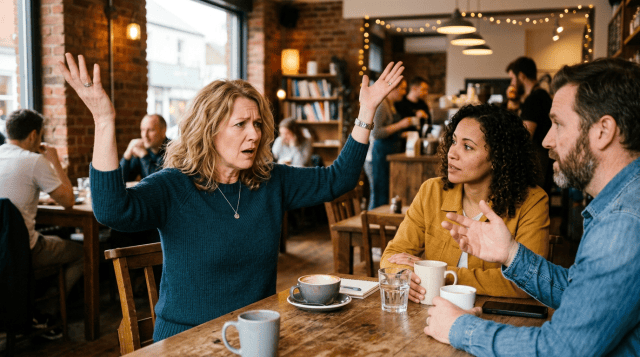
Many Empaths are frequently misunderstood or misinterpreted. That alone isn’t unusual, plenty of people are. The difference is that Empaths have a heightened sensitivity to the thoughts, emotions, and assumptions of those around them. Because of this, they can unconsciously pick up on how another person expects them to behave.

Continue reading

The Quiet Signs A Friendship Is Doing More Harm Than Good

You may already know, especially if you are a regular reader of my blog, that certain people in our lives, those who bring stress, tension, or emotional heaviness, can quietly wear us down over time. They can even add years to our life in the way of premature aging.

I remember having a sense of relief when I finally understood that creating a little distance from certain relationships isn’t cold or unkind; it can actually be a deeply healing act towards ourselves.

But it took me time, quite a lot of time, to arrive at that understanding.

For the longest while, I questioned myself instead. I wondered if I was just being overly sensitive, if I was reading too much into things, or expecting too much from people. There was also that lingering belief that stepping back from someone, especially someone who had been in my life for a long time, somehow made me unkind… or worse, disloyal. I think many of us Empaths feel like we should endure and make space for others even when it is damaging.

This is a subject I explored last year in my post Empaths Are Not Emotional Punchbags, where I discussed the importance of recognising when we’re being drained or overextended. But what I feel drawn to talk about now are those long-term friendships that don’t necessarily feel obviously harmful, but over time have shifted or quietly soured in ways we may not immediately recognise.

Continue reading

How Breath Affects Empath Wellbeing

If you are someone who feels deeply, who notices the subtle shifts in energy in a room, who carries other people’s emotions as if they were your own, then your breath matters more than you may realise.

As Empaths, we often live in a world that feels loud, fast, and overwhelming. Our minds can be busy. Our nervous systems can feel constantly “on.” You may already know I have written before about breathing exercises to calm the busy Empath mind. But recently, after reading Breath by James Nestor, I felt called to go deeper.

In his book, Nestor explains that many modern humans have forgotten how to breathe properly. He connects poor breathing to anxiety, sleep problems, dental issues, inflammation, and more. What struck me most is how something so simple, something we do every moment of our lives, can either gently support our wellbeing or quietly undermine it. Yet it is a subject that is not being discussed enough.

And this feels especially important for Empaths.

Continue reading

The Importance of Letting Go of the Expectations You Place on Others

For Sensitive people, especially Empaths, having expectations of others often feels like part of the package. We believe people should treat one another with fairness and respect. We imagine how someone should respond, how they should care, how they should show up, and how they should treat others, because this is how we naturally behave ourselves.

But not everyone experiences the world with the same depth of feeling.

And that’s where the pain begins.

When you feel deeply, things that might roll off someone else’s back can cut you at your core. A careless comment. A missed call. A lack of acknowledgment. These moments can linger for days or even weeks. What feels small to someone else can feel profoundly personal to you.

Continue reading

Empaths and Comfy Clothes: What it Really Means

Are you one of those Empaths who can’t wait to get home and change straight into your comfies? As in the moment the door closes, the outside world is shed along with restrictive clothes, and your body finally exhales.

Or do you tend to stay in your working clothes all evening?

The reason I’m writing about this today is because I genuinely found it amusing that putting comfy clothes on the moment of getting home isn’t something everyone does. It came up casually, almost in passing, and I realised that what feels completely natural to me, and to many  Empaths, is something others don’t even think about.

Some people stay in their work clothes all evening, move straight from the day into the night, and never feel the need to mark that transition at all.

For many Empaths, that idea feels almost foreign. Clothing isn’t just practical; it’s energetic. There’s a clear difference between what we wear to face the world and what we need to feel safe, grounded, and restored.

Changing clothes can be how we consciously separate external demands from personal space. It’s a way of saying, this part of the day is over now.

If you come home and immediately change into something soft, loose, and comfortable, it’s rarely just about clothes. It’s a ritual. A transition. A quiet signal to the nervous system that it is finally safe to exhale.

As I’m sure you’re more than aware, for Empaths, the outer world can be demanding, stimulating, and emotionally loud. Throughout the day, we absorb far more than most, energies, moods, unspoken tensions. Changing into comfortable clothing is one of the ways we consciously reclaim ourselves. It helps us to re-establish a sense of control over our environment and our body.

In a world where so much feels external and unpredictable, this simple act brings grounding, familiarity, and calm.

It also shows that we know how to unwind. Empaths understand that carrying the entire day into the night is a fast route to burnout. Comfort allows us to gently release the weight of what we’ve held, rather than pushing through exhaustion. By changing, we’re not “switching off,” we’re restoring our energy so we can meet the next day with presence and clarity.

There is also a strong boundary at play. Cozy clothes are a quiet declaration that we have clocked out. Home is not an extension of productivity or obligation; it is a personal sanctuary. This ability to separate professional life from personal life is not idleness, it is emotional intelligence.

As Empaths, we are natural creators of safe spaces, and home is where that instinct comes alive. Soft clothing contributes to an atmosphere of comfort, warmth, and serenity. It reinforces the idea that this is a place free from performance, judgment, or expectation. Here, we can simply be.

This habit also speaks to deep emotional awareness. We are attuned to our bodies and our inner state. We notice when tension needs releasing, when the nervous system is overstimulated, and when rest is required. Rather than ignoring these signals, we respond to them. That is self-respect in action.

When balanced, towards ourselves, choosing comfort can almost be like an act of kindness. It reflects a belief that rest is valuable and that softness is not weakness.

There is also a quiet appreciation for simple pleasures. Loose fabrics, warmth, ease, these small comforts bring genuine contentment. We don’t need excess to feel fulfilled; we find joy in feeling at peace.

When we learn how to “come home,” truly “come home,” we will also discover how to care, restore, and sustain our energy in a world that often asks us to give far more than we receive.

I find it interesting how instinctive it becomes for Sensitive people to find comfort in all areas of life. We don’t analyse it or label it as self-care; we just do it. Our bodies know when they’ve had enough stimulation, enough holding, enough giving. Slipping into something soft becomes a small but powerful act of self-regulation.

While every Sensitive person experiences the world differently, most will discover their need to decompress. And this explains why comfort, ritual, and softness matter so much to us.

In noticing this difference, I was reminded that what might look insignificant on the surface often speaks volumes about how deeply someone feels, processes, and protects their energy. And sometimes, the smallest habits reveal the greatest self-awareness. Even if that is something as simple as choosing comfy clothes.

Until next time.

Diane.

Holding Space, Keeping Strength: Compassionate Service for Empaths

Over the years, I’ve often been asked questions like, “How can I support others without draining myself?” or “I want to help, what’s the healthiest way to do it?”

After answering these in comments many times, I felt it was worth giving the topic its own space again.

For Empaths, the desire to help is almost instinctive. Even when we’re not consciously trying, we naturally tune into the needs, emotions, and unspoken struggles of others. And it can be heartbreaking, truly soul‑crushing, to witness someone suffering and feel powerless to ease their pain.

This is especially true when the person in front of us is clearly struggling but too ashamed to ask for help. Some fear appearing weak. Others have spent their whole lives being “the strong one,” and when their world begins to crumble, they worry they’ll be judged for not holding it all together.

The truth is, every human being, no matter how wise, evolved, or resilient, needs guidance at some point. But each person must reach a place where they’re willing to seek answers, ask for support, or make the changes required for healing. We cannot do that part for them.

We tend to view suffering as something purely negative, and of course, pain is never pleasant. But suffering is also one of the greatest catalysts for growth. It cracks us open. It deepens our awareness. It can even initiate profound spiritual awakening. Still, even the strongest souls need a gentle nudge or a compassionate presence along the way.

So, to come back to the original question, how can an Empath show up for others without drowning in emotional overwhelm?

Let’s take a look:

1. Start with the simplest, and most powerful, act: listening.

To be truly heard is healing in itself. Yet genuine listening has become rare. Many people are too busy rehearsing their own stories, waiting for their turn to speak, or filtering everything through their personal lens.

Empaths, however, listen with their whole being. We hear the words, the pauses, the energy beneath the surface. This is why people gravitate toward us. They feel seen. They feel understood.

But this gift has a shadow side. If someone is stuck in a looping victim narrative, repeating the same story without any intention of changing, it can drain us quickly. And sometimes, what they truly need is professional support, not an emotional sponge. Guiding them toward that help can be the most loving thing we do.

2. Set time boundaries, without guilt.

To protect your energy, it’s essential to limit how long you hold space for others. The right amount of time varies from person to person:

  • For some, five minutes is plenty.
  • For others, an hour feels manageable.

There’s no universal rule, only what feels sustainable for you.

And for added protection, grounding and energetic clearing before and after these interactions can make a world of difference.

3. The most powerful way to help others is to help yourself first.

This may sound counterintuitive to Empaths, who are wired to give. But when we nourish ourselves, mind, body, and spirit, we become clearer, stronger, and more aligned. Our vibration rises. Our presence becomes naturally healing.

When we are balanced and empowered, we don’t have to try to uplift others. Our energy does it for us.

Serving yourself is not selfish. It’s foundational. Because when you are full, you give from overflow, not depletion.

Empowering yourself is one of the greatest gifts you can offer the world.

I hope this brings clarity to your path and reminds you that your sensitivity doesn’t have to be a burden. When you learn to protect yourself, consciously, you can support others without losing yourself in the process.

Your journey matters. And the more you rise, the more naturally you help others rise too.

Ok, that’s it for today,

Until next time.

Diane

Combat EMF Overload: Strategies for Sensitive Souls

We live in a world humming with invisible energy. Smartphones, Wi-Fi routers, laptops, smart meters, and even your neighbour’s “smart” fridge, all of them emit electromagnetic frequencies (EMFs) that ripple through the air like unseen waves. What used to be a faint background buzz has now become a constant energetic storm.

Even those who consider themselves “untechy” are surrounded by EMFs day and night. Our devices connect wirelessly, our cities bristle with cell towers, and our homes glow with microwaves, Bluetooth, and fluorescent lighting. The air around us is charged, literally.

But here’s the thing: Empaths feel this more deeply than most.

Why Empaths Suffer More from EMF Exposure

Empaths are natural energy detectors. We sense emotional frequencies, subtle vibrations, and the moods of others as if they were our own. That’s because our energetic boundaries are thinner, we don’t just perceive energy, we absorb it.

So, when artificial electromagnetic waves flood our environment, they don’t just bounce off us, they merge with our field. The result? Overstimulation, energetic confusion, and symptoms that feel eerily similar to emotional overwhelm.

Think of walking into a room full of tension, you immediately feel it. EMFs create a similar energetic static, except it’s constant and invisible. For highly sensitive people, this bombardment can lead to deep fatigue, anxiety, brain fog, and even physical discomfort.

As physicist Jack Frazer of Oxford University notes, “Every atom has its own electric field, and when you put two atoms close together, they can mess around with the electric field of the other.” That “messing around” happens not only between people, but also between us and technology.

Empaths, whose energetic systems are already finely tuned, are simply more susceptible.

Signs You Might Be EMF-Sensitive

If you’re an Empath, pay close attention to how you feel after long periods around devices or Wi-Fi. You might notice:

  • Sudden mood swings or emotional heaviness
  • Restlessness, anxiety, or irritability
  • Difficulty focusing or remembering simple things
  • Fatigue even after rest
  • Insomnia or vivid dreams
  • Head pressure, dizziness, or tingling sensations

If these symptoms ease up when you’re out in nature or away from screens, EMFs may be a contributing factor.

The Science Behind the Sensitivity

Your body is electric. Every heartbeat, nerve impulse, and cellular communication relies on subtle electrical currents. When external EMFs interfere with these natural rhythms, the balance is disturbed.

Research led by Dr. Martin Pall, Ph.D., has shown that EMFs can overstimulate the body’s voltage-gated calcium channels, flooding cells with excess calcium and triggering oxidative stress. Over time, this can weaken immunity, disturb sleep, and accelerate aging.

Empaths, who are already highly attuned to energy fluctuations, can experience this interference even more intensely.

What You Can Do to Protect Yourself

While escaping EMFs completely is nearly impossible, there are many powerful ways to strengthen your energetic resilience and reduce exposure.

1. Go on an “Electric Detox”

Try turning off your Wi-Fi at night or spending a weekend in nature without screens. Notice how your mood, focus, and energy change. Many Empaths report a sense of lightness and clarity after just 24–48 hours away from electronics.

2. Wear Protective Crystals and Pendants

Crystals act as energetic filters, absorbing and neutralizing electromagnetic frequencies.
The most effective grounding stones for EMF protection include:

  • Black Tourmaline – A master protector that repels unwanted energy and grounds your field. See my last post.
  • Shungite – Known for its ability to absorb EMFs and purify energy (especially the elite “Noble Shungite”).
  • Hematite – Anchors scattered energy and strengthens your root chakra.
  • Pyrite – Acts as a reflective shield, bouncing away negative frequencies.
  • Magnetite – Balances polarities within the body and stabilizes your field.

Wear them as pendants, bracelets, or earrings, or keep a small piece near your phone, laptop, or router. You can even place them beneath your bed or on your desk for constant subtle shielding.

Many Empaths also find benefit from orgonite pendants, a blend of resin, metal, and crystals designed to harmonize EMF fields and restore energetic flow.

3. Ground Yourself Daily

Grounding (or “earthing”) neutralizes excess electromagnetic charge. Spend 10–20 minutes barefoot on grass, soil, or sand each day. You can also use grounding mats or sheets that connect to the earth through your home’s electrical system.

4. Create an EMF-Free Sanctuary

  • Turn off Wi-Fi at night
  • Keep your phone out of the bedroom (or in airplane mode)
  • Avoid wearing smartwatches overnight
  • Use wired connections when possible
  • Unplug appliances when not in use

Your body restores itself during sleep, give it a clean energetic space to do so.

5. Strengthen Your Energy Field

Meditation, breathwork, and energy-clearing practices like Reiki, sound baths, or salt baths with grounding crystals can all fortify your aura against EMF intrusion.
Hold your grounding crystal over your heart or third eye during meditation to release electromagnetic buildup and restore inner calm.

Knowledge Is Power, Energy Is Life

We may not be able to escape this electrified age, but we can learn to coexist with it consciously. For Empaths, awareness is the first step, understanding how these invisible forces affect us allows us to protect, balance, and reclaim our vitality.

By strengthening your energetic boundaries and using nature’s tools, like crystals, grounding, and mindful technology use, you can help to reduce the impact of EMF sensitivity.

And let’s not forget, when your energy is balanced, your Empathic gifts shine brightest.

I hope this helps on your journey

Until next time,

Diane.

©Diane Kathrine

When Dark Thoughts Aren’t Yours: A Simple Guide to Understanding Psychic Attack for Empaths

There are many types of psychic attack, but for this post, I’m talking about the kind that comes from one person toward another through dark or heavy thought energy.

Most Empaths experience psychic attack at some point in their lives, often without realizing what’s actually happening. It can be hard to tell the difference between emotions stirred up by our own stressful thoughts and those we pick up from others, which is why many Empaths don’t know they’re receiving someone else’s negativity.

While most people don’t feel the darker thoughts of others, Empaths often do. When someone is thinking negatively about them, Empaths can unconsciously pick it up.

Read more: When Dark Thoughts Aren’t Yours: A Simple Guide to Understanding Psychic Attack for Empaths Continue reading

START ON THE RIGHT FOOTING: A Gentle Return to Balance for the Year Ahead

Happy New Year.
So here we are, standing at the start of another year. There’s something special about this moment. A sense of possibility. As Empaths, we often arrive at a new year carrying far more than we realise: emotions absorbed, lessons learned, energy spent caring, giving, holding space. The turning of the year offers us an invitation, not to reinvent ourselves, but to return to ourselves.

It’s easy to feel pressure. Pressure to set grand goals, make sweeping changes, or promise to be “better” in ways that don’t always match who we truly are. For Sensitive souls, that kind of approach can feel overwhelming and misaligned.

So, today, I want to share with you a list of to-dos that always help me start the year on the right footing. They aren’t resolutions, rules, or expectations to live up to. They’re reminders. Anchors. Ways of being that bring me back into balance when life starts pulling me in too many directions.

Because it really is so easy to get caught up in the rat race of life, the constant doing, the noise, the comparison, the emotional demands placed on us from every angle. As Empaths, we feel this more intensely than most. In the rush to keep up, we often let go of the very practices that keep us grounded, protected, and emotionally well. We forget to listen inwardly. We override our intuition. We give more than we have, while quietly running on empty.

These reminders aren’t about perfection. They’re about alignment. They help me reconnect with my energy, my values, and my sense of inner calm. Some of them I revisit daily. Others gently resurface when I need them most. All of them support a more balanced, conscious, and compassionate way of living as an Empath.

Continue reading

The Empath’s Guide to Not Losing It at Christmas

It’s creeping up again… that time of year that some people adore and others quietly dread… Christmas!

For many, the festive season is pure magic. But in the past, December was one of my trickiest months.

As a child, and well into my twenties, I was Christmas‑obsessed. I loved every sparkle and song. But as the years rolled on, something shifted. December started to feel heavier, harder to navigate, and strangely draining.

Like clockwork, every year around late November, my mood dipped and my energy plummeted. I’d feel foggy, tense, almost like I was coming down with something. Then, as if by magic, around December 28th… I’d bounce back.

I blamed everything: work stress, too many nights out, winter darkness, lack of exercise, too much sugar, too much wine, you name it, I pinned it on that.

I tried everything to make December easier: changing my diet, cutting out alcohol, exercising more, taking sunshine breaks… but nothing shifted that December slump.

And then it hit me, the problem wasn’t my energy at all.

Continue reading

The Empath’s Immunity Trap: How to Protect Your Energy & Health

If you’re an Empath, you already understand first-hand that you don’t just absorb emotions, you can also absorb physical imbalances from the people around you. Many Empaths live with the frustrating reality that simply being near someone with the beginnings of a cold often means waking up the next day with the full-blown version. And not just the mild version the other person had, oh no. Empaths tend to get the deluxe, intensified version.

Empaths frequently suffer from more colds, aches, digestive issues, and mysterious symptoms than people who don’t absorb energy. But the real question is: why is this so common? What makes an Empath’s body more vulnerable than the average people?

Why Empaths Get Sick More Easily

One of the main reasons is that when Empaths become imbalanced, whether from emotional overload, physical stress, poor sleep, or taking on someone else’s worries, their energetic field weakens. And when the energetic body is stressed or porous, the physical body becomes more susceptible, especially the immune system.

Imagine carrying your own stress, fatigue, and worries… then add the weight of someone else’s anxiety, sadness, anger, or emotional chaos on top. That’s the daily reality for an Empath.

And here’s the part most Empaths don’t realize:

When you’re out of balance, your immune system is already working overtime, before a virus even shows up.

So even a brief encounter with someone who has the tiniest sniffle can tip you over the edge. And because Empaths tend to amplify the energies they pick up, the symptoms they experience can feel worse than anything the original person had.

But the biggest challenge?

Continue reading

Navigating Uncertain Times: Embracing Change

The question circling through so many minds right now is: what exactly is happening in the world?

I honestly don’t think anyone holds the full answer.

But one thing is certain: something significant is unfolding.

Our reality is no longer what it once was, and there’s no returning to the old patterns of life.

The Shifts

With each passing month, we witness more dramatic changes around us. Many people are living in worry or caught in uncertainty about where we’re headed. So much feels unfamiliar.

We are bombarded with conflicting messages. The mainstream offers one story; alternative voices offer another. And no matter what we believe, it seems no one fully understands the direction of the collective journey.

The finish line keeps drifting, and the noise around us can feel overwhelming.

Continue reading

Stay Grounded with Black Tourmaline: Your Protection Tool

Finding Ground in the Chaos

We are living through an age of extraordinary change. Everywhere we turn, the world feels charged, a mix of transformation, tension, and uncertainty. It’s taking a great deal of effort for many of us simply to stay calm, healthy, and hopeful. And perhaps most importantly, to stay grounded and protected.

This is where Black Tourmaline becomes more than just a stone; it becomes an anchor.

Continue reading

Embrace the Outsider: The Courage to Challenge Norms

I first wrote about this subject some years ago, when the world already seemed uncertain. Yet now, as collective energies shift and confusion deepens, the need to revisit it feels stronger than ever. The message of having the courage to question, to stand apart with benevolence, has never been more important.

The Courage to Question: How We Can Think Beyond the Herd

Have you ever sat in a group where everyone was passionately agreeing on something you didn’t believe in, and yet, you nodded along just to keep the peace?

If so, you’re in good company. Most of us have done it. It’s human nature to want harmony, to stay connected with our friends, family, or social circle, even when it means staying quiet about what we truly feel.

But what if that instinct to go along to get along isn’t always in our best interest? What if, instead of keeping the peace, it quietly erodes our integrity and dulls our critical thinking?

That’s where the 10th Man Rule comes in, a simple but powerful concept that challenges our deep-rooted desire for comfort and conformity, encouraging us instead to look at things from another perspective.

Continue reading

Truth Isn’t One-Size-Fits-All

If I, as an Empath, experience something you don’t, does that mean your gift is less real or mine is more?

If your intuition is razor sharp but mine sometimes falters, does that make me less connected?

If I can see the shimmering hues of your aura but you can’t see mine, does that mean I’m the “stronger” Empath?

And if you can instantly decipher the meaning behind the emotions you sense, while another Empath can’t, does that make them unskilled or inauthentic?

What about those times I feel utterly drained in someone’s presence while another Empath doesn’t? Does that mean I’m simply tired of them or that their energy is pulling too much of mine?

Here’s the truth I’ve come to know: as Empaths, we are not all made from the same mould. We are gloriously diverse. Just like every other human being, we carry different personalities, backgrounds, DNA, beliefs, sensitivities, and strengths.

What works for one Empath might not work for another and that’s perfectly okay.

Some of us thrive in solitude, while others recharge through connection. Some speak loudly about what they feel; others quietly observe, knowing that not everyone is ready to hear what they sense. Yet, we live in a world that constantly nudges us toward sameness toward herd thinking where even in the spiritual community, there’s pressure to fit into one version of “the Empath experience.”

I’ve even seen it said that grounding or shielding yourself from emotional energy is unnecessary that instead, we should simply learn to “navigate” frequencies. And while that’s a beautiful idea, it’s not quite that simple.

For some Empaths, energy flows easily they walk through a crowd untouched. For others, it’s like walking through a storm without an umbrella. One person may need to ground, cleanse, or shield daily just to feel balanced. That doesn’t make one better or worse it just makes us different.

We see this kind of variation everywhere in life. Some people need extra vitamin C and zinc in winter to stay healthy, while others never catch a cold. Some burn after ten minutes in the sun, while others tan effortlessly. One person can handle loud music all day; other needs earplugs to function. Why, then, should Empaths be any different?

The longer I live, the more I realize how little I truly know. But one thing I do know for certain is this: the human experience and the Empath experience is meant to be unique to each of us.

Unfortunately, society doesn’t always make room for that uniqueness. We’re taught to colour inside the lines, to fit neatly into labels, and to mistrust what doesn’t match our own understanding.

The Missing Ingredient: Acceptance

Now, I know this might sound like a bit of a rant, but what I really want to highlight is acceptance the quiet power that can shift our entire outlook on life.

Everywhere we look, people demand acceptance for who they are their beliefs, their feelings, their way of living yet, in the same breath, many refuse to offer that acceptance to others.

It’s human nature to want to be understood, but how can that happen if we’re unwilling to understand that someone else’s truth might look nothing like our own?

And here’s something to think about: acceptance doesn’t sell.

We are subtly encouraged to fight, divide, and discredit because as long as we’re busy opposing one another, we’re distracted. Acceptance of self and others doesn’t fuel conflict, consumerism, or control. In a strange way, acceptance is bad for business but it’s very good for the soul.

We can’t end hate with more hate. We can’t heal division by deepening it. And we certainly can’t build understanding while condemning what we don’t understand.

Imagine a world where we could simply allow people and Empaths to be who they are, without judgment or competition. What a peaceful place that would be.

Change What You Can, Accept What You Can’t

Now, acceptance doesn’t mean tolerating toxicity or settling for less than you deserve. It means recognizing what is yours to change and what isn’t. It’s about knowing when to adjust your path and when to simply let things be.

When we accept that each of us is meant to be different in how we feel, think, look, and love it’s incredibly freeing. It’s like taking a deep breath after holding it for years.

Even accepting that some people will always clash with our energy can be liberating. You don’t have to fix them, understand them, or like them. Just accept that they are who they are and move on in peace.

The Question

So, If it’s not true for me, does that mean it’s not true for you?

As Empaths, as humans, as souls having this shared yet separate experience our truths don’t have to match.

Your path and mine may look entirely different, yet both are valid, both are real, both are sacred.

And if we can truly embrace that if we can learn to accept not only our differences but also the diversity of truth itself then maybe, just maybe, the world will start to shine a little brighter.

Until next time,

Diane

By Diane Kathrine