As an Empath, what you eat may be affecting you far more than you realise.
When it comes to finding emotional balance, we often focus on protecting our energy, setting boundaries, avoiding negativity, and managing the emotions we absorb from the world around us. Yet one of the most important influences on our emotional wellbeing is something we frequently overlook: the food we eat every day.
A healthy, well-nourished body provides a stronger foundation for a calmer, more balanced mind.
If you identify as an Empath or Highly Sensitive Person (HSP), you may already know how easily your emotions, energy levels, and overall sense of wellbeing can fluctuate. What you might not realise is just how much your daily food choices could be contributing to those fluctuations.
Although dietary advice is often associated with weight loss or physical fitness, the benefits of eating well extend far beyond appearance. Food can influence our mood, mental clarity, energy, sleep, and ability to cope with everyday stress.
For an Empath, these influences can be particularly noticeable.
The Hidden Connection Between Food and Emotional Sensitivity
Many Empaths spend years trying to understand why they feel overwhelmed, emotionally drained, irritable, or unusually sensitive on certain days.
They may assume they have absorbed too much of another person’s energy, spent too long in a busy environment, or simply reached their emotional limit.
And sometimes, that may be exactly how it feels.
But what if there is another contributing factor?
What if some of the emotional turbulence you experience is being influenced by what you have eaten?
Certain foods and dietary habits can affect how we feel in ways we don’t always recognise. Blood sugar fluctuations, excessive caffeine, poor nutrition, food intolerances, and irregular eating patterns may all contribute to changes in mood, energy, and emotional resilience.
Some highly processed foods are also deliberately formulated to be extremely appealing, making them difficult to resist even when we suspect they aren’t doing us any favours.
And it isn’t always the obvious junk foods that cause problems.
Sometimes, the foods we consume regularly, the ones we consider harmless or couldn’t imagine living without, are worth taking a closer look at.
Why We Don’t Always Recognise the Effects of Food
One of the biggest obstacles to understanding how food affects our wellbeing is that the connection isn’t always immediate.
We tend to assume that if something doesn’t make us feel unwell shortly after eating it, then it must agree with us.
But this isn’t necessarily the case.
Some food-related reactions can be delayed, while other effects, such as changes in energy, sleep, or mood, may develop gradually or be influenced by several factors at once.
This can make it difficult to recognise patterns.
For example, you might wake up feeling unusually anxious, irritable, emotionally vulnerable, or mentally foggy without any obvious explanation.
Your first instinct may be to blame your surroundings, another person’s energy, or something that happened the previous day.
Yet your diet, sleep, stress levels, or a combination of these could also be playing a part.
This is why becoming more aware of your body’s responses to food can be such a valuable part of the Empath’s self-care journey.
Could Your Diet Be Heightening Your Emotional Responses?
If you regularly experience emotional overwhelm, low moods, or unexplained changes in your energy, it may be worth exploring whether your eating habits are contributing.
Some of the experiences that can accompany poor nutrition, irregular blood sugar, excessive stimulants, or individual food sensitivities include:
- Increased irritability and emotional reactivity
- Mood swings and fluctuating energy
- Feelings of anxiety or restlessness
- Low moods and reduced motivation
- Difficulty concentrating or mental fog
- Feeling less able to cope with everyday stress
- Fatigue and emotional exhaustion
- Sleep disturbances
- A greater desire to withdraw from social situations
These experiences can have many causes, and diet is not always responsible. Persistent anxiety, depression, or other significant symptoms deserve appropriate medical attention.
However, recognising the relationship between food and emotional wellbeing can give you another useful way to support yourself.
Not every difficult emotion is necessarily something you have picked up from someone else. Sometimes, your body may simply be asking for better care.
And this is an important distinction for an Empath to understand.
Your Body May Be Telling You More Than You Think
As an Empath, you may already be familiar with the quiet nudges of intuition.
That inner feeling that something isn’t quite right.
The subtle sense that you need to make a change.
Or the persistent thought that a particular habit is no longer serving you.
When it comes to food, these inner promptings can be worth exploring.
Perhaps you have repeatedly thought about reducing refined sugar, cutting back on caffeine, or changing the way you eat.
You may then find yourself noticing articles, books, conversations, or information about those very subjects.
It can feel as though the same message is appearing everywhere.
Whether you view these moments as intuitive guidance or simply a growing awareness of something that matters to you, they can provide a useful opportunity to pay attention.
Your intuition may encourage you to explore, but your body’s responses, reliable nutritional information, and professional advice can help you determine which changes are genuinely beneficial.
The key is to become more observant of how different foods leave you feeling, rather than automatically dismissing those subtle signals.
Are you eating something because it genuinely nourishes you, or because it temporarily changes how you feel?
That simple question can reveal a great deal.
And sometimes, the foods we are most reluctant to reconsider are the very ones worth examining first.
Nourishing the Body Can Help Support a More Balanced Empath
Many Empaths focus so much attention on managing the outside world that they forget to consider what is happening within their own bodies.
They work on energetic protection, emotional boundaries, meditation, grounding techniques, and avoiding people or environments that leave them feeling depleted.
These practices may form an important part of their personal wellbeing routine.
But they are only part of the picture.
If your body is constantly running on poor-quality nutrition, insufficient nourishment, excessive stimulants, or erratic eating patterns, it may be harder to maintain the emotional steadiness you are working so hard to achieve.
Being an Empath doesn’t mean you have to spend your life feeling emotionally exhausted or at the mercy of your sensitivities.
Sometimes, the most meaningful changes begin with the simplest daily habits.
And what you choose to put on your plate is a very good place to start.
Discover The Eating Plan for Empaths & HSPs
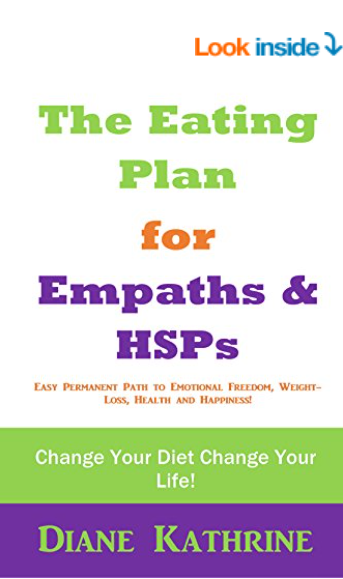
If you would like to explore the connection between food, emotional sensitivity, and physical wellbeing in greater depth, The Eating Plan for Empaths & HSPs offers a practical approach to becoming more aware of your eating habits and how they may influence your everyday life.
The updated edition explores the importance of nourishing the body, recognising individual food responses, and making dietary changes that support greater balance and wellbeing.
Because looking after yourself as an Empath isn’t just about protecting your energy from the outside world.
It’s also about caring for the body that carries you through it.
If you are interested in learning more about how diet impacts your Empath life and what foods are emotional triggers then you may want to read The Eating Plan for Empaths & HSPs

The Easy Permanent Path to Emotional Freedom, Weight-Loss, Health and Happiness!
Modern diets and lifestyles have taken too many Sensitive people down without them realizing. Most have no idea how food hinders their happiness or how making a couple of changes could transform their life.
The Eating Plan for Empaths & HSPs:
- Exposes the true nature of drug-like food on your Sensitive traits
- Reveals the easy-to-follow steps to overhaul your diet
- Enables you to take back control of what you feel, think and absorb
- Sets you up for a life of joy and emotional freedom
- Shows you how to suppress and soothe Sensitivity stress
- Promotes weight-loss and wellbeing
Click here to go to Amazon Store
The secret to any self-improvement lies in having knowledge and a willingness to change. Until you make changes to your diet, you will never understand how it affects you as a Sensitive Person.
If you want to see an amazing transformation in the way you look, feel and think you need to read this book!

