There are many layers and mysteries to an Empath. So much so, much of life is spent uncovering and discovering what being an Empath is all about.
The sooner we discover who we are, and come to understand our incredible traits, the better we can navigate the journey.
Sadly, there are too many who go through life not knowing who they are. Nor realizing some of their quirky ways are actually part and parcel of being Sensitive. And this is why I continue to spread the word about the many ways of an Empath
Here is a list of some of the less discussed behaviours that sets the Empath apart (as well as a few of the better known ones – thrown in for good measure).
1. Possesses Emotional Intelligence
Empaths encompass incredible emotional intelligence, which they use to make careful decisions they hope will bring balance into their life and the lives of others. But as emotional intelligence is a rare gift, in a world ran by logic and rules, it can leave the Empath hurt and vulnerable by those who do not function or think in the same way.
2. Excellent Judge of Character
Sensing all they do about people and life makes the Empath an excellent judge of character. Their first impressions are always correct.
3. Senses Deep Emotional Energy
An Empath senses emotions intensely, both their own and others. But this ability can weaken them, especially when it is emotional pain they feel. This is the opposite of who they know they are. Deep within they recognize they are here to do something special, but are often held back from finding their purpose by the confusion of what they experience emotionally.
4. Endures Empath Overwhelm
It is easy for an Empath to become overwhelmed without necessarily understanding the reason for it. They often look for ways to shelter from this overwhelm in vices such as alcohol or drugs. It may take time for the Empath to discover these substances have the opposite effect and make their pain more intense.
Is it your emotion you are feeling? Or does it belong to someone else?
Learning to differentiate between ‘whose emotion belongs to whom’ certainly proves to be a challenge for an Empath.
Every Empath quickly discovers of their ability to sense the emotional energy in others, but some struggle to distinguish these emotions from their own.
I often get asked questions like: ‘How do I define what I feel in another person?’ or ‘How can I block the emotions coming from others?’
Not understanding what other people’s emotions represent is more common than you might think within the Empath world.
When I was younger (teens and twenties), I did not know I could sense another’s emotions. I thought my own insecurities made me feel uneasy when around certain people. If anyone carried hidden pain, negative energy or anger issues, I felt them as a deep sense of discomfort. Which I wrongly interpreted as being part of my own social hang-ups.
Having strong intuition you can trust is a huge help when navigating the turbulent journey of Empath life!
Luckily, those who are Sensitive are born with a strong sense of intuition. It is an intuition they can continue to build over the course of their lives.
Being able to follow your intuition, and trust its promptings, not only guides you towards the life you may dream to live, but also helps when discerning the emotional energy belonging to others.
Many Empaths wrongly interpret the emotional energy belonging to another; often claiming it as their own. By developing a strong sense of intuition it helps to prevent this from happening. Here we will take a look at the best ways to do it:
1. Practice meditation daily. If only for a short time. Five minutes a day is better than no minutes. Stilling the mind, through meditation, is one of the best ways to develop intuition.
It is not an overnight process. Some have to work harder than others. It is in meditation you receive the answers to the questions, you may have asked. These answers come through messages and visions.
2. Know your visions are real. The visions you see in meditation often have significant meaning… you just need to decipher them. Many of your messages come through symbolism or code and are unique to each one of us. For example: one person may see a red rose in their mind’s eye and interpret it as a message of love; another may see the same vision, but interpret the thorns and color red as a sign of danger.
Your visions and messages are exclusive to you and that is why it is important to recognize their meanings. Continue reading →
In recent times, more and more information has become available on the traits of Empaths and Highly Sensitive People (HSP). But as little as ten years ago this wasn’t the case. Many Sensitive people struggled to understand who they were and why they had such powerful emotional reactions to life situations or when around certain people.
It is interesting to note how many Empaths discovered they were also introverts on their quest to uncover why they ‘felt’ so much when around people. And a need for time alone was not just down to having been ‘peopled’, it is very much an introvert trait. But even the extrovert Empaths discovered, like introverts, they also need time alone to recharge.
During my many years of research I came across Dr. Elaine Aron, a prominent research psychologist who wrote a book about HSPs.
In her research, into the inner-workings and behaviour traits of Sensitive people, Dr Aron interviewed 39 people who described themselves as either being introverted or easily overwhelmed by social stimulation, and queried their film preferences, creative activities, relationships with family and friends, and philosophical and religious views.
Based on these interviews, and further research, she came up with a compilation of 27 attributes of a Highly Sensitive Person.
Here’s a sampling:
Highly Sensitive People tend to be keen observers who look before they leap.
They arrange their lives in ways that limit surprises.
They are sensitive to sights, sounds, smells, pain, and stimulants such as coffee.
HSPs have difficulty when being observed or judged for general worthiness.
They have a tendency to be philosophical or spiritual in their orientation, rather than being materialistic.
They dislike being engaged in small talk.
They describe themselves as being creative or intuitive.
They dream vividly and have good dream recall.
They love music, art, nature and physical beauty.
They feel exceptionally strong emotions, such as acute bouts of joy, sorrow, melancholy and fear.
They process information about their environments, both physical and emotional, very deeply.
They notice subtleties: such as another person’s shift in mood or a light bulb burning too brightly.
They have an unusually strong conscience.
They dislike violent films and TV shows.
The are acutely aware of the consequences of their own behaviour.
In social settings they often focus on subjects like the personal problems of others.
Aron also found that many introverts tend to be Highly Sensitive…or Empaths!
Do you identify with any of the above traits?
It should be noted that because someone is an Empath does not always make them an introvert, there certainly seems to be more introvert Empaths than extroverts, but many introvert Empaths tend to be a HSP.
An introvert Empath or HSP has more chance of becoming excessively withdrawn, to the point of becoming a near recluse, especially if they’ve taken many knocks in life (read more about this here).
If would like to discover more about where you sit on the introvert/extrovert spectrum click here to take the Briggs Meyers personality test. It’s quite an eye opener.
For more books on the incredible Empath traits and ways for the Empaths to harness their hidden power click here.
It may sound like a cliché statement to make, but if you change your diet you really can transform your Empath life!
Let me explain more:
Last year, I eliminated wheat from my diet. It is one of the best things I have done for my health and Empath wellbeing. It was through this elimination that I discovered how great a part diet plays on Empath traits, but especially the emotions.
I have already written about the devastating effects wheat has on the body and mind. And, after more in-depth research, I will expand on the reasons behind this and take a look at how wheat and gluten is being linked to many diseases, and how it affects the way Empaths interpret the emotional energy of others.
Every Empath will benefit from removing wheat, and even gluten, from their diet. Especially if they suffer from any kind of depressive illness or if they are introverted to the point of not wanting to venture out into the world.
The wheat you consume today is nothing like your grandparents feasted on. It is now the product of genetic manipulation and these changes began as far back as 1935 when genes for semi-dwarf wheat were first bred.
Dwarfing the wheat genes enabled greater seed production. And, because dwarf wheat only grows to a height of two feet, instead of the usual four, it made it less prone to wind damage.
By the 1970s this semi-dwarf wheat was being successfully farmed in Mexico, India and Pakistan. By 1985 much of the Western world was producing semi-dwarf wheat and by 1997, 81% of the developing world had introduced this crop.
Although the sole intention of genetic crossbreeding of wheat was to give greater yield, thus ending world famine, it changed components of the wheat protein known as gliadin, which caused many problems to the human body.
To try and explain this as un-technically as possible:
Gliadin is a lectin and a part of wheatgerm and gluten. Lectins are proteins that are found within plants and animals; they do the same job of antibodies within the human body, fighting off foreign invaders such as bacteria.
Stomach acid has little effect on lectins – they are virtually indigestible! So, if a person has consumed wheat, the lectins move into the intestines undigested. The intestinal tract knows exactly how to filter waste and extract nourishment; it knows toxins and bacteria from the nutrients our bodies need to feed its cells.
Lectins have the capacity to switch off this filtering system and disturb the intestines ability to act as a filter. The colon then becomes permeable or leaky and allows toxins into the body that have no right to be there.
These toxins wreak havoc on our physical systems and show up in any part of the body as: inflammation of the gut, bowel disease, arthritis, dermatitis, depression, anxiety, acid reflux, asthma, eczema, inflammation of the organs, imbalance in the endocrine system (system which secrete hormones into bloodstream), chronic fatigue, weight gain/loss and joint pain.
But the above ailments are just the tip of the iceberg. And, for the Empath, lectins can heighten all their negative traits and supress the positive.
Depression
Another symptom related to the changes in wheat is the plague of depression that has been on the rise since the mid eighties; coincidentally around the time genetically mutated wheat became abundant and a staple at every meal.
In the 1950s it was estimated that no more than 50 to 100 people out of a million had the need for antidepressants; that figure stands today at 1 in 10!
More than 40 million people worldwide are now taking antidepressants. According to The National Centre for Health Statistics, in America alone, the use of antidepressants increased by 400% between 1988 and 1994 and numbers have continued to escalate since then.
It has been scientifically proven that wheat can change your personality and behaviour!
In tests, wheat was put through the process of digestion. It was found when wheat broke down, during digestion, it did so into many small proteins. These small proteins had the ability to cross the blood-brain barrier and bind themselves to the opiate receptors of the brain, having the effect of creating behavioural changes such as paranoia and depression.
The opiate effect of wheat is similar to that of narcotics, but without the pleasurable high and is addictive. So addictive in fact that it will give withdrawal symptoms soon after elimination.
An Empath is sensitive to anything of a narcotic nature. They are also prone to experiencing depression or heightened negative emotions, simply by being around anyone who is suffering. Consuming wheat heightens any negative emotions they experience, both their own and those they pick up.
The last thing an Empath needs is to be brought down by their food. This is why they will benefit from wheat elimination.
To some, the notion of giving up wheat (bread, cakes, pasta and pizza) fills them with dread, even anger, that is just an addiction talking.
Once eliminated from the diet, the desire for wheat foods disappear completely. For some it may take days for others a couple of weeks. However, the addiction will return if wheat is reintroduced, as well as some other nasty effects.
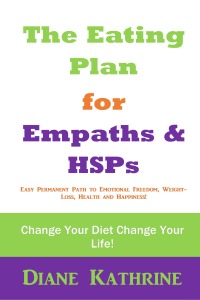
(Update 2017) I believe so much in the power of diet change for an Empath I have written a book about it. If you too want to see big changes in your health and happiness, and I mean changes, why not read The Eating Plan for Empaths & HSPs, it might transform you Empath life!
The main aspect of being an Empath is feeling and experiencing the emotions of others. For example, an Empath can tell when another is nervous, when one is angry or sad. They may enter shopping centres, or busy peopled places, and feel an array of strange sensations wash over them like a tidal wave. This is due to the gift of being able to feel…
Granted, not all Empaths consider the ability to experience other people’s emotional energy as a gift. In fact, some would say the opposite. But that is often because they have emotional or physical imbalances to work through (which may take some time), and this makes feeling the emotions of others as intrusive and ‘just too much!’
Before they become aware of their birthright, some Empaths may not give much thought to all they experience, energetically, because what they feel happens so naturally. It is not something they force, nor do they have to work at it. They may go through life assuming everyone experiences the same, not realizing that what they ‘feel’ is a unique part of Empath life.
But once the Empath’s eyes are open to their incredible traits and abilities they have, they can’t unsee them. All those ‘feelings’ finally have an explanation.
Other than their ability to sense the emotions of others, most Empaths also have incredible intuition…
Empath intuition comes in many forms, but for most it comes as strong gut sensations, having the ability to read others, or just having a ‘Knowing’ about future outcomes.
Intuition can be developed (see this post for more details), if that’s what one wants, but most Empaths already have very dependable intuition (in the way of gut-feelings) without having to try at it.
Some ignore their gut-feelings for their own reasons: Maybe they want to see the best in others, or perhaps they don’t believe in their intuition as much as they should. But every Empath’s gut-feelings are there to warn, serve and protect them from experiencing anything they don’t need to.
The strong sense of intuition an Empath has is both their guide and their best friend.
They may question their intuition, especially if it does not fit in with what their mind or ego wants, but they would be wise to listen to it.
Strong urges, feelings, premonitions or notions in any shape or form, happen for a reason and it is in one’s best interest to take heed of them.
The reason behind them may not be revealed for days, weeks, months or even years but they will have a purpose that will eventually reveal itself. For more information on tuning into Empath intuition see this post.
Another one of the many traits an Empath has is the ability to feel the energy of the days of the week.
Many love the vibe of a Saturday morning, because it feels calm, peaceful and uplifting, but are not so keen on the energy of Sunday evening, there’s a reason for that too…
Empaths pick up on collective energy.
The start of the weekend, when the majority are off work, can feel deliciously freeing. Late weekend evenings (Sunday evening for example), can carry that heavy vibe, as people prepare to return to jobs they dislike or even dread.
Some Empaths blame their workday feelings on their own job dissatisfaction, not realizing they are picking up on the energy of those around them.
But not only do Empaths have the ability to feel energy, some can also see it.
I remember, from an early age, seeing energy fields (auras), around the animate and inanimate, without even trying.
I loved lying on the grass, on a warm summer’s day, and watching the hazy energy around the trees as they swayed gently in the breeze. I assumed this was something everyone could see/do.
It was only in adulthood, that I discovered not everyone could see energy fields. I realized it was just another trait of being an Empath and Sensitive to energy… There are many more.
An Empath’s traits may strengthen or weaken with passing years, depending on life circumstances. But they have these traits for a reason, and a great part of Empath life is figuring them out and learning how they can guide them towards the life they were born to lead.
Want to learn more about Empath traits? Click here.










 Empaths Empowered