For Sensitive people, especially Empaths, having expectations of others often feels like part of the package. We believe people should treat one another with fairness and respect. We imagine how someone should respond, how they should care, how they should show up, and how they should treat others, because this is how we naturally behave ourselves.
But not everyone experiences the world with the same depth of feeling.
And that’s where the pain begins.
When you feel deeply, things that might roll off someone else’s back can cut you at your core. A careless comment. A missed call. A lack of acknowledgment. These moments can linger for days or even weeks. What feels small to someone else can feel profoundly personal to you.
Sadly, yes. But there’s more to it than you may think…
We may regularly read about the people who are toxic to an Empath, but not often the other way around. But he Empath can become toxic. Both to themselves and to others.
This may come as a surprise, considering all Empaths have a strong sense of empathy, and the last thing they would want is for another to suffer by the energy they emit, or their ways of being.
We will look at how an Empath can become toxic shortly, but first, I would just like to say that although the word toxic sounds a bit extreme, it is simply an easy word to describe something that is harmful not only to self, but also to others. I am not using it in respect of being fatal, causing another’s death or anything like that… Just thought I should point that out before I start 😉.
The thing is, we are currently living in a very tarnished world. It is a world that is purposely triggering us as humans, both physically and energetically. The more our emotions are negatively manipulated, the more negative energy we emit. Which, as you can imagine, is not good for anyone.
As Empaths, we tend to have heightened emotions, and an ability to powerfully project energy. So, the last thing we want is for our low-level emotions to be artificially stimulated, but, sadly, it is happening more and more.
So, without further ado, let’s take a look at some of the common themes that could make an Empath fall under the umbrella of being toxic:
Well, we’re back in full throes of the silly season, AKA Christmas.
For the Empaths of the world, this time of year can affect us in some weird and wonderful ways.
I don’t know about you, but each year I seem to have a different December experience. One year might be up, and another might be down, emotionally, physically and energetically. I may want to celebrate the festive season one year, and then the next I may want to avoid it and get away to the sunshine.
This year has been a bit of a one-off. In that it has been kind of hectic, but in a positive way, with lots of socialising and meeting up with friends. (So much so, it has been difficult to find the time to write a post.) But I have to say I have thoroughly enjoyed it thus far (I know, we still have a way to go yet 😉), and I feel my daily habits are what have kept me so uplifted and in balance. Continue reading →
There will always be ups and downs. Life tends to throw things our way that take us off course or puts us in a dark place for a period of time.
Everyone experiences difficulties.
No one is exempt.
And it’s not always because you are doing something wrong. However, there are some ways of being that will keep you unhappy if you don’t work to fix them.
The good news is they are very fixable. The problem is just figuring out what is really making us unhappy. Because, it is too easy to blame it on the wrong thing.
As the old saying goes: ‘You’re not unhappy for the reasons you think.’
So, without further ado, let’s take a look at 7 reasons why you might not be happy as an Empath: Continue reading →
It is my theory that an Empath’s reactions to other people’s emotions can work in a similar way to an allergy.
I’m not sure how much you know about allergies, so let me briefly explain:
If you suffer with non-life-threatening allergies and you come into contact with something you are allergic to on a daily basis, you normally suffer mild symptoms (I say mild, but that is not to say they are not uncomfortable). However, if you spend time away from these allergens, and then come back into contact with them, the allergic reaction will be much more severe.
So, this is how, I believe, for many Empaths, people’s emotional energy can act like allergies.
When around people every day we might have ‘milder people-energy reactions,’ but if we take time out from the world, or from certain people whose energy winds us up the wrong way, our stress levels might spike more than normal when back in touch (think lockdown months).
The good news is there is a certain hormone that acts like an ‘energetic antihistamine’ in the way it helps soothe the emotions.
It is a hormone that can be released by taking some simple measures, and it goes by the name of oxytocin.
Oxytocin is a powerful hormone and neurotransmitter.
It has many incredible benefits. It is known as the love hormone, for the reason it plays a big role in the emotional bond between mother and child, but its benefits go way beyond that.
Oxytocin affects the function of the brain and nervous system and greatly impacts the emotions.
Low levels of oxytocin are connected with conditions such as: heightened emotions, depression, anxiety, social phobias, PTSD and more.
Studies suggest that by increasing oxytocin it reduces stress and anxiety and instils a sense of calm serenity.
Exactly what we need, as Empaths.
Although there are several ways in which oxytocin production can be induced, here are some incredible science-backed ways that are super beneficial for an Empath:
1, Aromatherapy Oils
There are three such aromatherapy oils that have been proven to increase oxytocin in the brain: Clary Sage, Geranium and Chamomile.
I use all three and can vouch for their effectiveness, especially for lifting the mood and clearing anxiety and fearful emotions. In fact, they are on my list of essential oils for an Empath.
(When purchasing essential oils always make sure they say 100% pure essential oils.)
2, Take a Bath
Researchers have found that hot environments, warm temperatures and increased sweating activates specific oxytocin-producing parts of the brain. Taking a hot bath is a perfect way to increase body temperature.
A long soak in a hot bath is one of my favourite ways to effortlessly rebalance. Especially when adding my favourite crystals, essential oilsand salt into the mix.
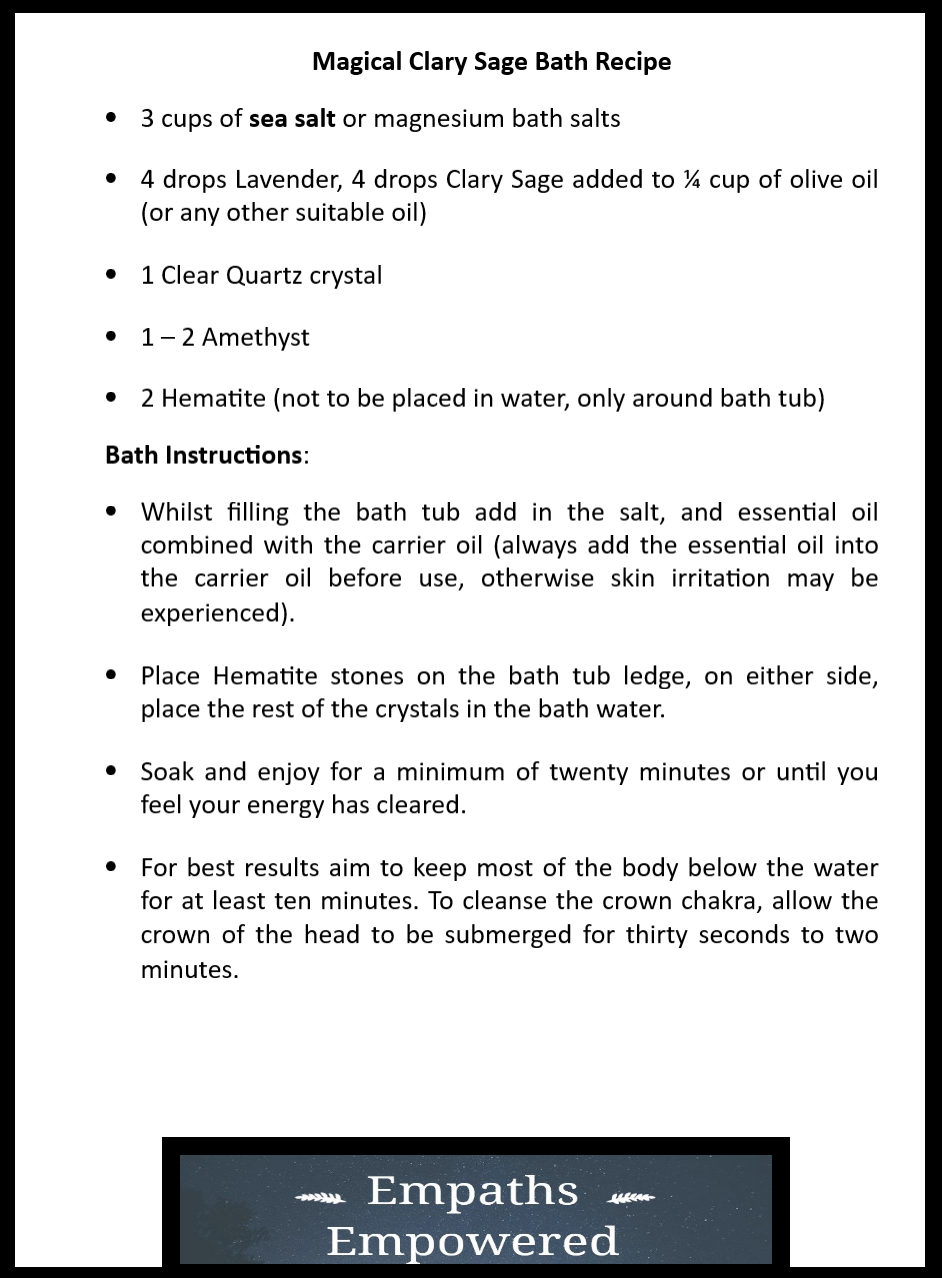
Here is one of my favourite bath time recipes that includes Clary Sage:
The above combination works in so many ways. It helps soothe the emotions. Clary Sage mixed with Lavender works in being both sedative and euphoric. It’s a combination that is soothing to the soul, the senses and the skin. The Hematite works in being grounding. The Amethyst pulsates a powerfully cleansing energy through the bath water which not only clears the aura but also frees the mind of unnecessary thoughts and mind clutter. (When using crystals in water be sure they are water safe. The majority of quartz stones are usually fine.) And the salt is excellent to clear negative energy and restore health for an Empath.
3, Enjoy a Cup of Tea
Drinking herbal teas, such as chamomile, are an easy way to enjoy the herb’s many healing benefits. Chamomile is a medicinal herb that has been traditionally used for its calming and anti-inflammatory properties; it has also been proven to help you produce more oxytocin.
I regularly drink chamomile tea, more so recently, with fresh ginger added. Ginger is a powerful anti-inflammatory herb that has many healing benefits and is particularly good for digestive issues. Simply pop a chamomile tea bag into a mug, add an inch of fresh ginger, and fill with boiling water. Infuse for a minimum of 5 minutes. Enjoy.
5, Boost Your Nutrients
We all require vitamins and minerals in our diet to stay happy and healthy. However, there are three nutrients known to increase oxytocin production in the brain. They are magnesium, vitamin D and vitaminC.
Magnesium is essential for the proper functioning of our nervous system and neurotransmitter activity. Researchers have found that the oxytocin receptor requires magnesium to function properly, and magnesium increases the action of oxytocin at the receptor.
So, basically, if we don’t have enough magnesium, the oxytocin cannot do its work.
Some foods containing magnesium are: dark chocolate, bananas, almonds and avocado.
Vitamin C is another incredible essential nutrient. Researchers have found that vitamin C not only optimizes and increases levels of oxytocin, it also stimulates the secretion of oxytocin. This powerful vitamin, found in many foods especially citrus fruits, also plays many important roles within the body, such as keeping the immune system strong. Vitamin C is also known to decrease stress and improve the mood.
Vitamin D is known as the sunshine vitamin, because the sun is the best source. Research shows that oxytocin is directly activated and controlled by vitamin D. This makes it understandable why so many people suffer with seasonal affected disorder (SAD) during the winter months. Spending twenty minutes a day in the sunshine is a great way to increase the vitamin, but supplements also work.
Getting more of the above nutrients, through diet or supplements, can help boost oxytocin levels. Read more herehow Empaths benefit from supplements and why they are at risk from vitamin and mineral deficiency.
5, Sleep in the Dark
I have written about the importance of Empaths sleeping in the dark, both in books and in articles. Spending time in darkness is important for the production of oxytocin by boosting melatonin.
Melatonin is known as the anti-ageing hormone, produced by the pineal gland (area of third eye) in the darkness. It is an antioxidant and anti-inflammatory and helps prevent, and treat, many illnesses including cancer. Melatonin significantly increases secretion of oxytocin.
Simply keeping the bedroom pitch black, by using black out blinds or curtains, can help boost oxytocin levels.
This post gives an easy way to produce more melatonin and thus oxytocin.
6, Finding Balance
As well as increasing oxytocin, there are several other simple ways to activate the ‘energetic antihistamine effect’ for an Empath. All forms of Grounding will work for protection, but especially Forest Bathing and Earthing. Click on the links to find out more.
In a world overcome with worry and fear, we all benefit from diving into the soothing ‘waters of silence.’ Not only as a retreat from the noise of fear but to reset within ourselves.
Staying in the space of silence, if only for short periods of time, is known to improve memory, stimulate brain growth, relieve stress, combats insomnia, and provides relaxation and respite for the body.
Silence is the perfect remedy to counteract the viral emotions that have infiltrated every area of life. It is both healing and rejuvenating. Not only does silence help reset and still a wired mind, it is also good for balancing our sensory gating process.
Sensory Gating
Wikepdia defines sensory gating as a neurological process of filtering out redundant or unnecessary stimuli in the brain from all possible environmental stimuli.
Sensory gating prevents an overload of irrelevant information in the higher cortical centres of the brain.
Many Empaths experience ‘problems’ with their sensory gating. Sounds can be louder and more irritating, and the many different ‘layers of noise’ in the environment can lead to stress and physical ailments
I liken the Empath’s ability of feeling others’ emotions to a form of sensory gating. Too much sensory information, in the form of emotional energy, works like an influx of noise, proving to be both stress-inducing and exhausting for many. The act of spending time in silence helps to counteract this.
Ten simple ways to access the power of silence:
Here are ten simple ways to benefit from a ‘silence session.’
1. Meditation
Let’s start with the obvious one and the healing technique I always come back to, meditation.
Meditation comes with so many benefits (including many science-backed benefits) from relieving stress to healing physical ailments. It is known to improve all areas of life and helps us become better at everything we do. It also gives us a greater understanding of who we are and where we fit into life.
During these trying times, meditation is something we all benefit from practising, not only for stilling and empowering our mind, but to tune us into our heart centre and higher consciousness.
2. Listen to soft music with ear phones
So, listening to soft music might sound like a contradiction. After all, isn’t music classed as noise? But this is a good method for when your environment is noisy. It cuts off the sound of the outside world and allows for a respite of the mind. The right kind of music can also be healing as well as soothing to the senses. I came across these incredible healing music videos on YouTube here and here.
3. Go into the woods
The sounds of Nature offer the healing benefits of silence. Being around densely populated areas of trees is the perfect way to bask in Nature’s healing stillness. Even better, if you can get close to natural running water it is also purifying (read more here).
If Earthing is practised at the same time, as being out in Nature, it will have double the benefits.
4. Get up early
The quietest time of the day is in the early morning, before the world has woken up. Instead of engaging the brain first thing, by flicking on the TV, radio or checking messages, why not start the day in silence?
Just by sitting in the stillness of a sleeping world it can zone us into the healing vibrations of silence.
5. Take an aromatherapy bath
You may wonder what taking a bath has to do with finding silence, but this is more for silencing the stress sensors. Water is healing in itself, but when an aromatherapy oil is incorporated into the mix, such as Lavender or Chamomile (added to a carrier oil first), it helps turn off the senses engaged by viral emotions.
Essential oils send healing instructions to the limbic system (the system that controls emotions) to relax. They are particularly good to use if you have been experiencing anxiety triggered by external stress. (This post has 11 essential oils beneficial for an Empath).
Light some candles, put a do not disturb sign on the door and immerse yourself for at least twenty minutes (if you live in a noisy house pop your earphones in).
6. Go outdoors after dark
For the most of us, the only time we spend in darkness is when we go to sleep in the evening. But being outdoors at night, in a safe area such as the garden, is particularly good for tuning into silence.
There’s something incredibly stilling and peaceful about the darkened night sky, especially when blanketed with a sweeping of shimmering stars.
If you don’t have a garden, sitting with your eyes open in a darkened room also reaps many benefits.
7. Be at one with your breath
When you fully tune into the breath, by focusing on your inhale and exhale, it helps drown out the noise of the outside world. If you cover your ears at the same time it has an extra benefit.
Try it now and see for yourself. Put your hands over your ears, close your eyes and take 8 to 10 deep breaths. When you remove your hands, you will experience a quieter world than before.
Any type of yogic breathing exercise is also perfect for stilling the mind.
8. Chanting
Again, another one that seems to contradict the idea of finding silence. But, repeating a song-like mantra, such as OM, is not only healing to the body, mind and spirit it helps us find a stillness within.
Chanting is known to purify the environment by creating positive vibrations and filtering out fear energy.
A French physician and auditory neurophysiologist, Dr. Tomatis, believes the ears affect the entire nervous system. He noted how sounds like music or noise, determine physical energy levels and our sense of well-being. He experimented with different music frequencies, noting their effects on humans. By studying Benedictine monks, he observed the healing benefits of chanting. When the monks daily chanting ritual was taken away, for a short period of time, most fell ill. When the singing was reintroduced, they made a full recovery.
9. Get creative
Draw, paint, sing or arrange flowers. Whatever gets your ‘creative juices’ flowing will work.
When the creative mind is kept occupied, by engaging in something that holds the imagination, it tends to switch off from the outside world. Viral emotions and loud sounds get locked out by the ‘lack of sensory engagement.’ This in itself has the benefit of silencing the mind.
10. Turn off the WIFI
We are so connected to the internet in our daily lives, that just by having a WIFI break it helps tune us into the power of silence. It is not until we take a break from the noise of electrical frequencies that we see how they affected our body and mind. This also helps in the respect that when we are constantly bombarded with online information it leads to sensory overload.
≈≈≈
I hope you find this list beneficial and inspires you to tune into the vibration of silence. Even if it’s just for ten minutes a day.
One thing all Empaths will have endured at some point on their journey is a person who behaves in a narcissistic way. For some, however, it is part of their everyday life.
When I use the term narcissist target, in the headline, I am referring to anyone who has been on the receiving end of a narcissist’s attention. This can be via their initial charm through to their lies and manipulation.
But the question has to be, why do Empaths so often end up in the firing line?
One explanation is because of the ‘light’ an Empath carries inside. It’s a light that might be considered, by certain individuals, as a weakness or something that can be controlled. Yet that isn’t the only reason. Before we come to that, we will take a quick peek at the traits of a narcissist.
Traits of a Narcissist
Some of the better-known traits are: high self-esteem, a distinct lack of empathy, excessive self-admiration and a tendency towards selfish or resentful behaviours. But there’s more…
One-sidedness, a manipulative nature, unrealistic expectations of others, an excess need for control, and a huge sympathy deficiency can also fall under the same umbrella. It is these traits that often cause problems for the Empaths.
Why Empaths Attract Narcissists
Over the years, I have discussed the subject of why narcissists attract Empaths and vice versa in other posts and books (here,here, and here). It is my belief that although at opposite ends of the spectrum, both Empaths and narcissists are sensitive people and highly reactive.
Like attracts like. Sensitive attracts sensitive. Yet, one of the biggest reasons why Empaths are so often targeted and end up in the firing line of those with a narcissistic personality is because of their keen observational skills.
The Reflecting Empath
An Empath doesn’t just listen to a person’s dialogue, they observe tone and usage of words, they notice body movements, facial expressions, and they see things that others try to mask. This causes an issue for those who do not want to be ‘seen.’ Particularly when they are hiding something.
A narcissist never wants to be wrong, never wants to be seen as the ‘bad guy’ and wants others to think highly of them. But an Empath often acts like a mirror. Even if they don’t point out the narcissist’s concealed traits verbally, they will be reflected back. (This is discussed more in the Mirror of the Empath.) An Empath reflects truth. They will see it hidden behind any façade, no matter how tightly knitted.
If the finely polished veneer of a narcissist is threatened in any way, especially with exposure, they will attack. They often concoct outlandish stories to discredit an Empath, or anyone who reveals their truth, and blame them for the actions that they carried out themselves. They target those considered a threat.
Generally, a narcissist will not face the truth of who they are, if it makes them appear wrong or in any way a bad person. They convince themselves that it is everyone else who is at fault.
Being Repelled
Even if you have a strong repulsion towards narcissists, and avoid them like the plague, you can still be on the receiving end of their wrath, or end up as a target. Narcissists like to be praised and feel special. They want respect and if they are not shown it, they tend to lash out. If you have bruised a narcissist’s ego, by not giving them the respect they think is deserved, then expect to face a backlash.
The Good News
The good news is that narcissists can work as a catalyst on an Empath’s journey. Although it will not feel like it at the time, but anything that ignites insecurities, emotional injuries, victim mentality or personal challenges, can also push an Empath towards transformation. The darkness reveals the inner light. It encourages us to work on ourselves, which in turn takes us to a higher vantage point.
It is often the case that the more challenges an Empath faces the wiser they become and the greater their understanding of life.
I am certainly not suggesting that constant suffering is the perfect formula for enlightenment, but we come to a point when we understand why we have endured such difficulties. We can then see how they shaped us into becoming better people.
Avoiding Excessive Emotional Reactions
Life really is an obstacle course. It gives rise to many uncomfortable and painful experiences. However, if we have an emotional reaction to everything a narcissist, or anyone else, says or does then we put ourselves on a fast-tracked path to self-destruction.
We have to train ourself out of excessive emotional reactions, avoid wallowing in our own misery and not be tempted into revenge. Not that revenge is ever on an Empath’s radar, but it is very easy to think, ‘I’ll show them.’ Or to have the belief that if I say or do nothing, they are getting away with it. This will just lead to more lies and more attacks. We must not forget there is a greater force than ourselves at work that creates balance… Karma.
KARMA
Having been observing the world for many years, I have seen the law of attraction and karma work over and over. People may seem to get away with treating others atrociously, then, suddenly, karma catches up.
Everything goes around. Karma keeps each of us responsible for our behaviour.
Dealing with the Problem
So, finally, the question is, what can we do about being a narcissist target? Well, one thing is for sure, we will not change the mind of a narcissist, or those who have an over-inflated ego, if it makes them to appear wrong. If they have decided it is us who is at fault, it is unlikely we will get them to admit otherwise. We can only change ourself and our reactions. Take back our power.
The best way to react is with no reaction and don’t be drawn into conflicts designed to pull you down or make you feel bad. Now, when I say react with no reaction, I am not saying lie down and let someone trample all over you. Simply walk away. Avoid feeding your fear or pain by getting upset at the lies they may spread.
When you continuously focus on something or someone your attention feeds the energy. Remember: where your focus goes your energy flows.
Life really is too short to waste your precious time on those who steal your joy and drain your energy.
When you walk away or show no interest in their lies, they move on. The more lives they touch, with manipulative ways, the sooner their truth is revealed.
By avoiding excessive emotional reactions, it also helps keep one’s vibration raised. Yes, I know, easier said than done. But by getting in control of the mind and working to stay grounded, it helps us better control our emotional reactions. (This is where mind-stilling though breathing techniques, meditation and yoga can come in handy.)
Stay in gratitude and it will keep you in a ‘higher space.’ Keep pushing forward! Stay in your light and don’t let anyone extinguish it!
If you have ever experienced a panic attack you will know only too well that they are not something you would wish on anyone. They create the kind of dread and sense of impending doom that are beyond comprehension.
Because Empaths and HSPs feel everything so intensely, it is often the case that they are more prone to experiencing anxiety and panic attacks.
Not Feeling Safe
Going through life over-feeling emotions and the emotional energy of others can create the perception of being unsafe, especially when out in public or around certain people. Feeling unsafe can put the body into fight-or-flight mode which is a response of the sympathetic nervous system. When the body is in fight-or-flight it is in a constant state of stress.
We often experience a sense of not feeling safe when we have experienced past traumas, especially bereavement or physical or emotional abuse, and not dealt with them.
Another issue many Empaths and HSPs face, which can affect our perception of safety, is feeling misunderstood. When we feel misunderstood it often creates an inability to truly connect with others. Which often leads to a sense of isolation, and is a catalyst for repetitive dark thoughts.
Research has shown that negative thought patterns can be inflammatory. They create problems within the body and mind and keep us in trauma mode.
We all have good and bad within us, light and dark. When we are suffering or in pain, as in with anxiety or panic attacks, it is often because we have inadvertently been feeding the darkness. We allow our pain to dictate our lives. That said, we don’t necessarily have to have been suffering to experience panic attacks. Sometimes external factors, certain foods or hormonal changes can be the trigger.
Being aware of triggers, as well as having knowledge of what we can do if we start to suffer with anxiety or panic attacks, can ensure we don’t needlessly suffer. The following are some simple steps to help prevent anxiety…
1. Use meditation and breathing exercises:
Breathing and meditation practices help cultivate more positive thoughts, help balance the stress hormones and instil calm. However, some people find meditation too stressful to perform when experiencing panic attacks or anxiety. The stillness can become unnerving. In these cases, moving meditations, such as yoga with the breath, or deep breathing is massively beneficial.
The Whisky Breath is a quick breathing exercise which can offer instant relief. Simply inhale for a count of four and then exhale for a count of eight. Continue for as long as you need. This exercise switches on the parasympathetic nervous system, which helps to prevent or stop panic attacks. The three-minute meditation performed daily, after doing the Whisky Breath breathing, will help keep the mind positive and anxiety at bay.
There’s more information on breathing exercises and yoga here and here.
2. Keep away from people who make you feel unsafe:
If you don’t feel safe, or have trust issues with certain friends or family members, or if you don’t feel they have your best interest at heart it can cause emotional trauma. It is wise to avoid those who create safety issues for the health of your body and mind, which in turn can prevent anxiety.
3. Check your diet:
Are you eating chemical-laden foods, or foods that are known to trigger autoimmune conditions? Anxiety can sometimes be a warning from your body, telling you to pay attention. If you suspect your diet is activating anxiety or panic attacks, keeping a food diary can help you pinpoint the triggers. Read more on this post.
4. Supplement wisely:
Even with the healthiest of diets it is difficult to know we are getting, or absorbing, a full range of nutrients. We often eat anti-nutrient foods without realising (foods that block or hinder nutrient absorption), which means the good stuff we do take in doesn’t get chance to do its job. Vitamin and mineral deficiency can be a big trigger for anxiety. A basic supplementation regime can help in regards to anxiety and panic attacks. This post gives more info.
5. Take Valerian Root:
Valerian root is a natural herb used for treating anxiety and insomnia. Similar to melatonin, valerian root puts you in relaxed sleepy state. Valerian contains a neurotransmitter called GABA, that is known to have a powerfully calming effect on the mind.
6. Do therapeutic exercise:
Yoga and walking are probably two of the most therapeutic forms of exercise. There is a type of yoga to suit everyone, but it has to be practised regularly to see results. Walking is easy and super beneficial for the body and mind. Also, high intensity exercise, which helps release human growth hormone, can be beneficial for stopping panic attacks.
7. Use crystals:
There are many different types of crystals that can help with anxiety. Rose Quartz in particular is a lovely stone to help with panic attacks. It is a love stone that really helps calm the emotions. When choosing crystals for anxiety it is best to see them in person (instead of ordering online). If gazing on a certain stone makes you feel calm inside it is generally a good choice.
8. Salt therapy:
Taking salt baths can be incredibly calming and soothing for the body and mind. Even better, if you live near an ocean taking a daily dip can work wonders for soothing anxiety. This post gives more details.
9. Check your water levels:
If you are dehydrated, even just a little, it can trigger anxiety and panic attacks. This post gives more information.
10. Reduce wireless air time:
More research is coming to light showing how WIFI is a major cause of anxiety and panic attacks, especially when spending a lot of time wirelessly downloading on the internet (Youtube, etc.). Give yourself a few days away from WIFI and see what effect it has. Switch your phone to aeroplane mode when not in use and limit your time on the internet. This post explains more.
11. Keep your bedroom as a calm zone:
Quality sleep is important for preventing anxiety and panic attacks. Don’t keep electrical gadgets, especially WIFI gadgets, in the bedroom. Keep your bedroom well aired and clean. Use black out curtains to ensure a solid night’s sleep.
12. Use essential oils:
Essential oils are perfect for instilling calm. Lavender being one of the best allrounders, but other good ones are Basil, Chamomile or Geranium. You can normally feel the calming effects of these essential oils within ten minutes of application. Simply massage a few drops, mixed with a teaspoon of oil, into the soles of your feet. Or use them in your bath, add them to your body oils or put a few drops on your pillow before sleep time. Check this post out for more essential oils and their benefits.
13. Avoid caffeine:
Caffeine is one of the worst things for triggering panic attacks and anxiety. It is found in coffee, tea, chocolate and colas. Avoidance will go a long way to keeping anxiety and panic attacks at bay.
14. Avoid stimulants:
Alcohol and recreational drugs can be another big trigger of anxiety. Many people assume alcohol is a relaxant, but it is when the effects wear off that the problems start.
15. Avoid chemicals:
If you are Sensitive, it often means you will be sensitive to chemicals in products and scents, which can trigger many unusual physical reactions and stress within the body. Keep your products as natural as possible, including laundry detergent, household cleaning products and personal hygiene products.
16. Listen to soothing sounds:
There are some incredibly soothing sounds that can help reduce anxiety and prevent panic attacks. Ocean sounds, angelic harmonies, thunderstorms, gentle chimes, etc. are incredibly calming to the body and mind. Try to avoid live music downloads (such as on Youtube) as the WIFI can trigger more anxiety. Perhaps buy a CD and listen through headphones.
17. Don’t eat late at night:
Eating late at night can be the trigger for sleep anxiety and panic attacks. Try to have your last meal at least three hours before bedtime to ensure it is digested.
18. Get out in Nature:
This is a perfect remedy for anxiety and panic disorder. Even listening to the birds singing is beneficial. Read more here on the benefits of nature for an Empath.
19. Massage and reflexology:
Massaging body treatments work wonders for helping with anxiety, especially reflexology, which works on the reflex points on your feet. Schedule in time for yourself and book in a weekly treatment to help soothe your body and mind.
20. Talk to a specialist:
If you know you have supressed past trauma such as a bereavement, emotional or physical abuse, or unresolved issues, it might help to talk to a trained therapist. Supressed trauma is often reignited in times of stress, which often triggers panic attacks.
21. Have your hormones checked:
This is a big one, especially for women. If you are going through any kind of hormonal transition, such as perimenopause or menopause, it can be a big trigger for panic attacks. Perimenopause often starts from the late thirties onwards and can create many unusual and uncomfortable physical and mental symptoms.
So, there you go. Hopefully, you will have found something on the list that will help if you suffer with anxiety or panic attacks. But even if you don’t suffer with anxiety now, it is always good to have this page bookmarked for future reference. Anxiety can be triggered at any point in life, sometimes with no known cause. Having a reminder of what steps to take to combat panic attacks can avoid a lot of unnecessary suffering.
I noted in my last quick post that I had been a couple of weeks without WIFI in December, and what a positive impact it had on me. It is quite incredible how dependent we have become on the internet for everything. So much so, it is difficult to imagine life without it. But have we really considered what effect all the electromagnetic fields (EMFs) are having on our Empath sensitivities?
In this last post, I discussed how many Empath lives are disrupted by sensory overload. Another massive factor which also contributes to this overload are electromagnetic fields (EMFs) which include WIFI.
Electromagnetic Pollution
Over the years, the use of smart phones and laptops has skyrocketed. Even the ‘untechiest’ person will have a mobile phone. It certainly doesn’t help that the majority of our phones are also connected wirelessly to the internet which gives off considerable amounts of EMFs when data is streamed.
This increase in mobile phone use has also led to the need for more cell towers around our towns and cities, which means greater levels of EMF in our environment.
Wireless gadgets are not the only problem. There are many other devices within the home that allow these invisible frequencies to build up; such as televisions, fluorescent lighting, microwave ovens, etc.
EMF and the Empath
EMFs are so powerful they can be measured.
You and me, we both create electromagnetic fields. Virtually every single process which keeps us alive can be traced back to an electric field. A giant electric field holds all our atoms together. We wouldn’t be able to function without our electric fields. Every time we move a muscle, we create an electric field. We are electrical beings.
Think about walking into a room full of angry people where the atmosphere could be ‘cut with a knife.’ It wouldn’t be long before you were affected by the EMF of the room (whether you were an Empath or not), via the merging of electrical fields. No matter how happy you were prior to entering an angry room, the electrical energy of others can influence your own energy and thus your mood.
‘Every atom has its own electric field, and when you put two atoms close together, they can mess around with the electric field of the other.’ Jack FrazerMaster’s Physics Oxford University
The above quote explains why the energy of one person can impact the energy of another. Our electric fields like to ‘mingle.’ It also shows that frequencies emitted by WIFI can ‘mess around’ with our own.
One electric field affects the way another functions. So, if you experience strange symptoms, or if your Empath traits are making life difficult, it could be caused by EMF.
Maybe it is time to pay attention to how you feel after spending a lot of time on wireless networks.
As Empaths we easily recognise the impact of the energy of people but many of us are also affected by the electromagnetic frequencies emitted within our environment without realizing.
Hazards to Health
EMF disrupt energy frequencies within our body and within our energy field, they affect our chakras and endocrine glands, immune system and nervous system. In fact, the symptoms of enduring too much EMFs are similar to those an Empath might experience from being ungrounded.
Here’s a Sampling:
Dark moods, depression or emotional overwhelm
Difficulty concentrating and trouble giving attention to anything which requires focus
Brain fog and memory loss
Anxiety, panic attacks and irritability
Fatigue and lack of motivation
Dizziness
Sleeplessness (even though exhausted)
How Do You Know If You’re Affected?
One of the best ways to find out if you are EMF sensitive is to have an electrical detox. Which I must admit can be a challenge because let’s face it, electrical gadgets are everywhere. Perhaps spend a few days away from all things electrical or just turn off the electricity in your home for a while and see how it affects you. Even just switching your phone setting to aeroplane mode, when not in use, will make a difference.
I personally found that when I was not using my phone and laptop for two weeks my brain became clearer, my thoughts more lucid and I felt more energised. Others report of feeling generally happier and healthier or having strange symptoms clear up.
The Solution
Sadly, continuous escapism of EMF and WIFI, in this modern world, is virtually impossible. Yet there is one simple thing we can do to help protect ourselves. Use crystals.
EMF Shielding
Certain crystals can act like bioelectrical shields against EMF. Not surprisingly, the crystals that work best for EMF protection are the stones we use for grounding.
Crystals to Use:
Ferromagnetic crystals (containing iron) are best for EMF protection. There are several of them, but my favourites are:
Hematite
Black Tourmaline
Shungite
If you have been impacted by electromagnetic frequencies, you will likely notice the difference as soon as you use one of the above grounding stones.
Other stones that can also be used are Pyrite and Magnetite (although I have never tried them myself, others have reported them to work).
How To Use Crystals for EMF Protection:
When using grounding crystals, such as Black Tourmaline, for EMF protection the goal is to create a shielding barrier between you and your wireless devices. The best ways to do this are:
Put them in your trouser/shirt pocket or wear them as jewellery such as necklace or bracelet.
Place them in between you and your devices. Perhaps on your work desk.
After Use
It is not always possible to keep a crystal on hand. In some cases, we need to use them after EMF exposure. They can be used with good results in the following ways:
Use your grounding crystal in meditations: Hold your crystal, or crystals, in your hands and keep your mind focused on their energy during your meditation.
Place a grounding crystal on the third eye (centre of forehead) for five to ten minutes: This helps with clearing any brain fog caused by EMF.
Use grounding crystals around your bath tub: (Not in water, as some crystals may rust). This not only helps clear EMFs; it also makes bath time a much fizzier and cleansing affair.
When using crystals for EMF protection there are two IMPORTANT THINGS to remember:
Powerfully magnetic crystals should not be used near your laptop or external hard drives because they could fry them.
Being semiconductors of energy, Clear Quartz (or other silicate crystals) should not be used near electronic devices, as they can amplify the EMFs
Extra EMF Protection
Although certain crystals work wonders for EMF shielding, we can also take further steps to protect ourselves. The simplest ways are to turn off your wireless routers at bedtime, don’t keep your mobile or other electrical devices on your body, keep your phones and laptops out of your bedroom, and switch off electrical appliances at the mains when not in use.
Also, as was mentioned in my last post, get out in Nature as much as possible. Nature heals us on so many levels and is the perfect protection from EMF. Read more here on the benefits of being in Nature for an Empath.
Remaining vigilant of what might weaken us as Empaths helps ensure we live our happiest and healthiest life. Knowledge is power. Hopefully, this post has shed some light as to how you might have been affected by EMF. We live in an ever-changing fast-paced world that seems to bring in more challenges by the day. Levels of electromagnetic pollution are bound to get worse, so taking some simple steps now to prevent overload can go a long way.
If you are interested in learning more about how crystals can help you as an Empath, I will be releasing a book on the subject in early spring.
Hope that you have all recovered from the festive period and here’s to a fantastic 2020!
A couple of posts ago, I discussed how an Empath is often painted as the villain. Today, I want to discuss a similar subject but from another perspective: The Empath’s shadow side.
The shadow side may sound like something devious that drives a person to do dark and dastardly deeds; but it is mostly the source of great emotional pain, especially within an Empath.
What is an Empath’s Shadow Side?
Basically, a shadow side within an Empath is the same as within anyone else: it is the unresolved issues, emotional pain and insecurities, buried deep within, that can affect our behaviour and outlook on life. The side we don’t always know how to deal with.
I also mentioned in my last post how many Empaths are continually working on themselves to become healthier, happier and all-round better people. The shadow side, however, is often the last thing we want to address.
It is in the things that hurt us or that which we hide from where we will find our shadow.
Most of us have a side that we keep hidden from the rest of the world and even from ourselves. Hiding from our shadow side could be likened to wearing a mask, to conceal something that we consider either too ugly to be seen or too painful to be confronted.
The Japanese believe that everyone has three faces: The face we show the world, the face we show our family and close friends, and the face we show no one. It is our hidden face which is our truest reflection and hides our deepest discomforts. Wearing a mask, to conceal one’s shadow side, is the way many live and is often considered the norm.
Revealing the Cause
A good way to reveal the shadow is looking at what hurts you most. Is it rejection or not being accepted? Could it be people taking advantage of your kind nature? or perhaps not being able to connect with others? Whatever it is, you will generally find the origins of this hurt in your childhood.
Sensitive people are impacted their whole life by the inconsiderate or cruel behaviour of certain individuals from their childhood: The school bully, an angry teenage sibling, an unaware teacher, etc. If something cruel and uncalled for was said or done to you as a child, a seed was planted, creating the roots of the shadow to build.
Hiding from one’s truth may seem like a contradiction on the part of an Empath. Especially considering that most Empaths tend to detest inauthenticity. Wouldn’t hiding a part of ourselves be classed as living in an inauthentic way…? Yes and no.
There is a good reason an Empath may hide the truth of themselves from certain people, and it’s not always to get them to like us.
When we awaken as an Empath, a new way of life is gradually revealed. Not only do we come to embrace and appreciate our unusual traits – traits that set us apart from others – but we start experiencing more synchronicities, we develop greater intuition and discover a new outlook. Everything we have experienced when around people, emotionally and physically, finally makes sense. We understand our need for time alone, why we feel crazy energy when in busy places, and why we experience overpowering emotions when with certain persons. We also come to understand the deeper layers of human nature.
Once awake, we see that most people only see things from their own perspective. The majority don’t have the ability to see the world in 3D, like many Empaths do, and therefore cannot get on board with our way of thinking or relate to the experiences we endure. Because of this awareness, we become vigilant of protecting our space and are hesitant of opening up… We also don’t like burdening others with our troubles.
One thing the ‘Empath Awakening’ doesn’t do is take away our woes. In some cases, we become more sensitive and feel emotions more intensely. We thus hide from our shadow side to protect ourselves from experiencing more pain.
The truth is, avoidance just prolongs the discomfort.
Humans are hardwired into avoiding pain. It is a form of self-protection. ‘Escapism of feeling’ is often done through suppressants such as food, alcohol or drugs, etc.
This never works.
Suppressants just numb or mask the pain for a while. They act like a distraction; taking our attention away from that which needs addressing.
Confrontation
Some believe that by confronting their shadow-side it will cause too much heartache; hoping that avoidance will offer the ‘easier ride’. Which is understandable.
Sadly, when we choose the ‘easy route’ in life, it rarely turns out to be the comfortable journey we wanted, especially when we are avoiding doing something we know we should do.
One of the simplest ways to face the shadow side is by admitting to our insecurities, or that which hurts us.
Admitting that we have been hurt by our past and that we are ready to let it go brings the pain out of the shadows. When facing our ‘inner-demons’, we work to take away their power.
That said, it is not always possible to remove all the buried pain of the shadow side. Some pain is hardwired and is part of us for a reason. It shapes us in many ways; allowing us to empathize at a deeper level.
When we accept that ‘emotional pain’ has a purpose on this journey and is not just some unfair burden that we were unfortunate enough to be saddled with, it can lessen the impact.
Calming the Shadow
Another aspect of working towards balance is to avoid anything which unnecessarily activates ingrained mood-memories created by the shadow.
Mood-memories are the go-to moods, initially activated by the pain body, that we hang out in when feeling low or when in a dark mental space. I find two of the biggest triggers being diet and people (and hormone fluctuations).
Diet
By eating foods that influence the hormones in a negative way, it not only lowers our vibration and slows us down, it also impacts moods. This has bearings on wellbeing and initiates dark emotions to be roused or remembered. Wheat and sugar being two of the biggies (read more here). Meat also plays its part with many Empaths (this post explains more).
Uncovering food triggers is an essential part of preventing activation of mood memory.
People
The type of people who become pain prompters for an Empath are those who hide their truth and pretend to be something they’re not. Basically, anyone who lives a big lie. Not just by lying to themselves, in hiding from their pain, but lying in their words, actions and energy. Those who hurt others with their disregard and those who hide their shadow behind their ego can act like triggers (read more here).
Just by spending too much time in the presence of anyone who carries the above traits could activate mood-memories.
Face the Pain
Facing hidden emotional pain frees us from living in its shadow.
Self-confrontation may seem like a scary option, but it is one of the best ways to release the emotional shackles of the shadow. If we have hidden insecurities, we continue to suffer, and we continue to draw to us those who play on these weaknesses (law of attraction).
The shadow side offers incredible lessons and serves us in many ways; but until we face it or at least admit to it, our actions and emotions are determined by its sway rather than by our conscious choice.
I will be discussing this subject from another perspective in my next post, so be sure to look out for it.
As I’m sure your already more than aware, being an Empath certainly comes with its challenges. One such thing is suffering with heightened sensitivities, like allergies and intolerances.
For many, having sensitivities tends to go hand-in-hand with Empath life. However, at a certain age you may find these sensitivities heighten and go into overdrive.
There are many reasons for this, but mostly it is down to a compromised immune system and shifting hormones. These changes are normally experienced from the mid-thirties onwards.
Sadly, with age, our bodies become less resilient to all kinds of stress, which means allergies and intolerances start having a greater impact.
The main difference between an allergy and an intolerance is that an allergy is triggered by the immune system, whereas an intolerance may or may not involve an immune system response. Intolerances can also trigger autoimmune reactions, where the immune system attacks the tissues of the body.
Allergic reactions show up straight away, whereas intolerances may not happen for anything up to a day or two after exposure… This is the same for being ‘peopled’. The effects of being ‘peopled’ may be experienced straight away or not for 24 hours or more…
Many Empaths have intolerances that they know of, but you may have become intolerant to something or someone and not even be aware of it.
If you are in contact with something on a daily basis that you are allergic or intolerant to, you tend to have a continuous, albeit sometimes minor, reaction. For example: you may suffer with a constant stuffy nose, itchy eyes, muscle or joint discomfort, lethargy or headaches; but because the symptoms seem minor, you give little thought to them.
Most of us already know what we should or shouldn’t consume. We get that nagging feeling that something is not a fit. But when sensitivities heighten with age, we may start reacting to things we have come into daily contact with for most of our life (including certain people), and therefore not make the connection.
So, you may now be wondering what types of reactions you could experience. Here’s a brief breakdown:
If you drink alcohol, you may find yourself getting intoxicated ridiculously easily and feel so ill after consumption that you believe you’re going to die. Hangovers last for days or even a week. This shows your body is not able to process alcohol like it did, and it’s time to eliminate or drastically reduce your intake.
After eating meat, poultry or fish you feel more depressed than normal and your energy levels plummet. Some Empaths feel the energy of an animal when they consume its flesh, which can cause depression; but also the chemicals and hormones injected into meat can cause a reaction that gets worse with age.
Your morning coffee starts giving you the jitters, making you anxious and/or nauseous. Many Empaths find their tolerance for caffeine decreases with age.
The day after spending time with a certain person you feel fatigued and depressed.
When coming into contact with air fresheners, cleaning products, perfumes or garden chemicals, your nose starts streaming and you develop cold-like symptoms.
Consuming anything genetically modified triggers a host of uncomfortable symptoms for days after.
White sugar or wheat products makes your body lethargic and your mind race.
Watching TV or spending time on the internet gives you brain fog and makes you feel restless or irritable.
You may find you put on weight, for no reason, which you cannot get rid of.
As Empath life already has enough challenges to deal with, you don’t want to endure any unnecessary suffering. So, if you find your sensitivities have heightened towards people, or anything else, it is a good idea to keep a lifestyle diary. Write down what you eat, chemicals you may have come into contact with in cleaning products or other, list the people you spend time with, whether you have reactions to hair dyes or beauty treatments, and make a note of time spent in front of a computer, TV or other media outlets, (for women make a note of your monthly cycle).
By keeping notes it will eventually reveal a pattern, and help you make the connection between how you feel and what you’ve come into contact with. It also helps you determine what is triggering or heightening your sensitivities.
One of the best ways to determine an intolerance or allergy is a process of elimination: To withdraw from your life, for a time, the suspected trigger and then reintroduce it after three to four weeks. If you have become intolerant you normally have a big reaction when its reintroduced (this even works with people). If you have a negative physical or emotional reaction it is probably time to eliminate the trigger.
Here are some other posts you might find helpful for determining physical weaknesses that may have developed over the years: Here, Here and Here.
Discover how the traits of an Empath impact the way you live and how to make the most of them…
I was having a conversation with a friend the other day about addictions. We were discussing the fact there are so many addictions that we are not aware of, or how they impact our lives.
When we think of addictions, we often just think about the ones related to drugs or alcohol, but there are countless more.
We get addicted to wheat, sugar, certain chemicals in foods, caffeine, sports, social media… But the addictions that are quietly destructive to our health and happiness are our addictions to negativity.
I have written in-depth about negativity addictions in my book: Become a Super-Empowered Empath, but not so much in blog posts. So, I hope to address that here.
The media knows that people have a natural draw towards negativity, because of our negativity bias. They play on this, to keep us coming back to their sites.
I often write about the importance of Empaths avoiding media outlets because of the strife it stirs up, and because it creates negative emotions.
Negative emotions give the body a rush of hormones that become addictive. That’s why so many people become hooked on having traumas and problems in their lives. These traumas fuel the brain with a hit of some of its favourite drugs: the stress hormones cortisol and adrenaline.
We read a lot about becoming addicted to dopamine, but we don’t see much about addictions to the stress hormones. But they are equally as damaging.
When the brain or body is addicted to certain stress hormones, it is much harder to recognize than with other addictions. But if not addressed, this dependence becomes the pathway to an unhappy life.
Although I have known many who have a penchant for negativity, there was one particular person I knew, who was heavily addicted (and probably still is). I will call her Shirley.
Shirley would create reasons to be angry and dissatisfied with her life, including anyone in it. She had a very one-tracked mind and would not allow herself to see anything but negativity in a situation. She pushed many people away because of her dark ramblings. Not intentionally though. Anyone who spent time with her, found themselves being dragged into wrathful discussions which would leave them feeling flat and depressed.
She blamed everyone else for her life not being the way she wanted. Shirley expected others to change for her, but not to make any changes for herself. Because she secretly thrived on negativity, she continued to draw into her life more reasons to be negative (law of attraction).
Shirley allowed negativity to make her bitter and vengeful. But that wasn’t who she was deep down. She had a kind side that got squeezed out by the darkness she allowed to grow within.
Her desire for drama was fuelled by her body/brain’s need for stress hormones. Her negativity addiction did so much damage to her life. She refused to address it or see it as being problematic, because she secretly thrived on it. Negativity became her purpose. It was an addiction that she became afraid to live without.
I’m sure every one of you reading this has come across a ‘Shirley’ in your life.
I’m not for a moment suggesting that an Empath is destined to become like Shirley. I wanted to show an extreme example of negativity addiction. However, Empaths are at risk of becoming hooked on the stress hormones stirred up by negativity.
The reason you may not consciously be aware that you are addicted to stress hormones, is because they are activated without you necessarily taking part. And what I mean by this is, the brain will be doing the work.
Once addicted, your brain will work to activate your body into releasing stress hormones by drawing your attention to anything that it knows will make you react.
Picking up and feeling other people’s stress or emotions is also a way your hormones can be triggered. Another is having had experienced trauma in childhood (the memories continue to activate stress hormones throughout life).
A negativity addiction can be at work without you even leaving your home or coming into contact with others. When not around people, stress hormones are activated mostly through the thought process.
After giving up many addictive things, I know exactly how tricky addictions are, especially with the brain. It is not until we give something up for a period of time that we see just how our choices and thoughts were governed by addiction.
With any addiction, we have to see it for ourselves.
If you suspect you have an addiction to negativity, and are therefore drawing more negativity into your life (like attracts like), you have to stay vigilant of knowing when your hormones are being spiked. You normally recognise this by the discomfort around the gut or chest area. It may feel like a burning sensation or a sense of dread.
As soon as you feel this, act immediately with a distraction so that your thoughts don’t get involved. Thoughts feed emotions. Emotions feed thoughts. Emotions are fuel for your stress hormones. You have a seventeen second window before thoughts take over and you become hostage within your own head. This post may help with distraction.
So, yes, Empaths are prone to having negativity addictions and this is because we tend to feel everything so powerfully. But there is always light at the end of the tunnel. Often when we become aware of a problem within, it is half way to overcoming it.









 EMF and the Empath
 This increase in mobile phone use has also led to the need for more cell towers around our towns and cities, which means greater levels of EMF in our environment.
 The Solution
 It is not always possible to keep a crystal on hand. In some cases, we need to use them after EMF exposure. They can be used with good results in the following ways: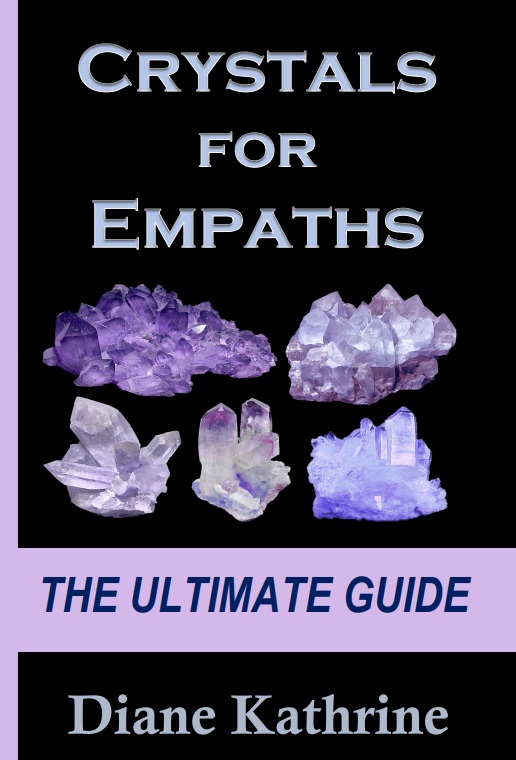









 Empaths Empowered